Very few Grenadian households buy everything in one place. The weekly shop is spread across a handful of stops, each chosen for what it does best: the market or a roadside vendor for fruit, vegetables and herbs, the fish market or a fisherman for fish, a bakery for bread, a supermarket for dry goods and cleaning products, and the village shop for whatever ran out on Wednesday evening. It sounds like more work than one trolley run, and it is, a little. It is also how people eat well on a modest budget.
Newcomers who shop only in the large supermarkets pay more for produce that has often travelled further, and miss the best of what the island grows. This guide explains how the different places fit together so that you can build a routine that suits where you live and how you cook.
Markets and roadside vendors: the fresh core
Market Square in St George's is the island's best-known market and busiest on Saturday mornings, when vendors come in from the countryside with provisions, fruit, vegetables, herbs and spices. Grenville has its own market for the east of the island, and smaller towns such as Gouyave and Sauteurs have market days and vendors of their own. Arriving early gives the best choice; by late morning the most popular items may be gone.
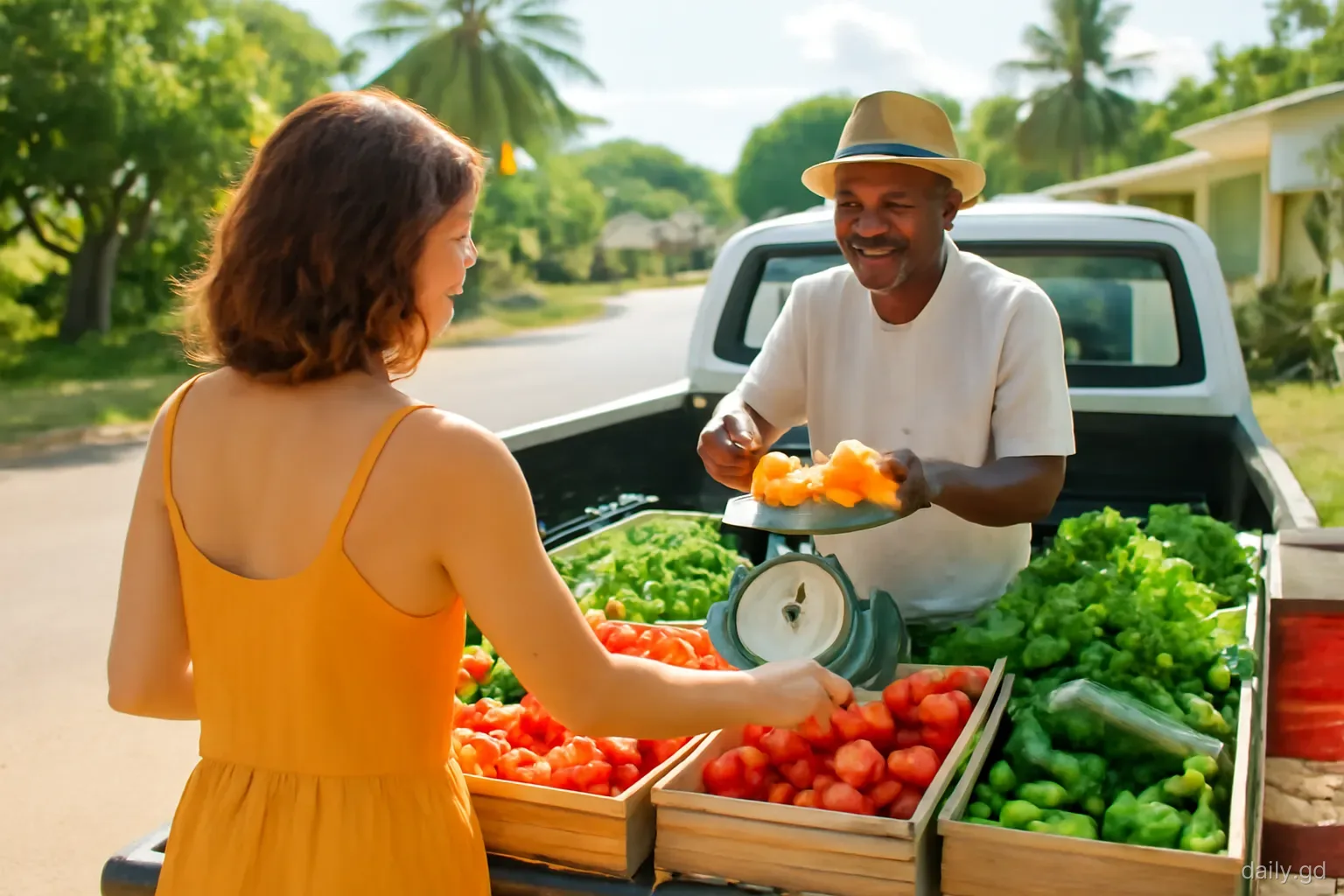
Away from the towns, much fresh food is sold at the roadside: from wooden stalls, from the back of pickups parked at junctions, and from farmers selling a few bunches of bananas or a bag of limes outside their gate. Prices are often lower than in town and the produce is frequently picked the same day. Vendors are generally happy to explain how to cook something unfamiliar, and regular customers are remembered.
Bring small notes and coins, a few sturdy bags and some patience. Most market vendors sell by the pound, the heap or the bunch rather than with printed tags, so ask the price before you commit. Bargaining is not a big part of the culture for everyday produce, but buying regularly from the same vendor often brings a little extra in the bag.
What to buy at the market or roadside
Ground provisions. Dasheen, eddoes, yam, sweet potato, cassava and tannia, plus breadfruit and green fig (unripe banana). These are the backbone of Grenadian cooking and almost always cheaper here than in supermarkets.
Seasoning herbs. Bundles of chive, thyme, celery, culantro and seasoning peppers for green seasoning, usually sold together or separately for very little.
Vegetables. Tomatoes, cabbage, christophene, pumpkin, cucumber, sweet peppers, bodi (long beans), carrots and okra, with availability changing through the year.
Fruit. Bananas, plantains, papaya, pineapple, citrus and whatever is in season, from mangoes to golden apples.
Spices. Whole nutmeg, mace, cinnamon sticks, bay leaves, cloves and cocoa balls for cocoa tea. Buying from the vendors who supply locals rather than the souvenir stalls usually means better value.
Fish: the fish market, the boat and the vendor
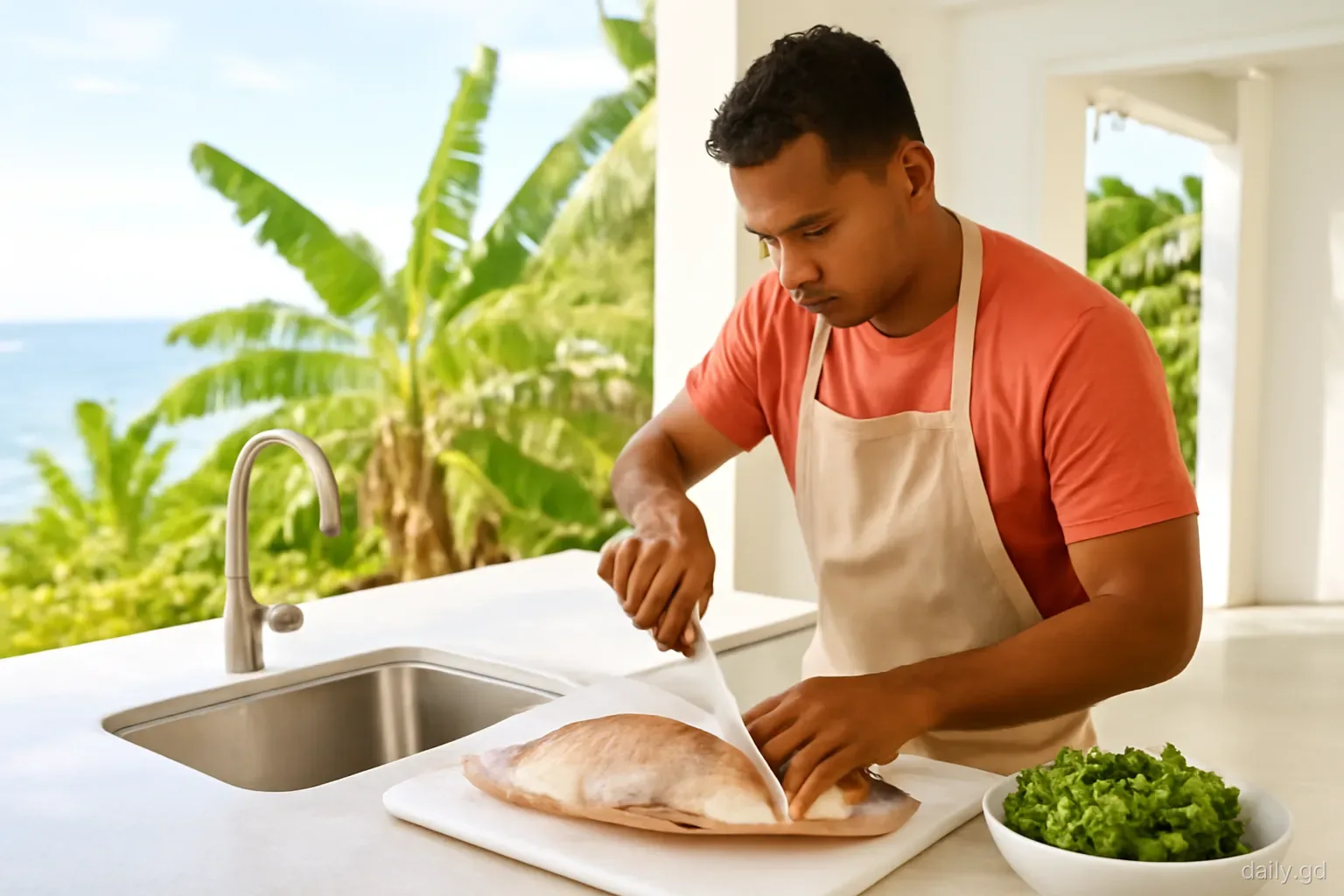
Fresh fish is one of the great bargains of Grenadian life, and households buy it from several kinds of source. There are fish markets in St George's and in fishing towns such as Gouyave, Grenville and others along the coast, where catches are landed and sold. In many coastal villages, fishermen sell directly from the beach when the boats come in, often announced by word of mouth or the sound of a conch shell. Mobile fish vendors with cool boxes also travel inland routes.
Timing is everything. Fish is freshest when the boats land, often in the morning, and the selection thins quickly. Tuna, kingfish, mahi-mahi (dolphin fish, often just called dolphin locally) and smaller fish such as jacks, snapper and robin are common, with availability changing with the season and the weather. Rough seas mean fewer boats and less choice. Ask the vendor to scale and gut the fish if you prefer, and bring a cool bag with ice for the journey home.
Supermarkets, MNIB and the village shop
Supermarkets. The larger supermarkets around St George's, Grand Anse and the south, and in Grenville, are best for rice, flour, sugar, oil, tinned goods, dairy, frozen meat, imported brands, toiletries and cleaning products. Watch for weekly offers, which can make bulk buying of staples worthwhile.
MNIB. The Marketing and National Importing Board, a state body set up to support local agriculture and supply, sells local produce and some imported basics through its outlets. It is worth checking for fruit, vegetables and juices, especially if you cannot get to the market.
Bakeries. Local bakeries produce fresh bread, rolls, coconut bread and sweet treats daily. Bakery bread is cheaper and fresher than packaged loaves, but goes stale or mouldy quickly in the heat, so buy little and often.
Butchers and chicken. Local chicken, pork, goat and beef are sold by butchers and some farms, often on particular days. Much of the chicken sold in supermarkets is imported frozen; local fresh chicken costs more but many cooks prefer it.
Village shops. Every community has small shops selling bread, tins, rice, drinks and household items. Prices are a little higher, but they save a bus fare for a single forgotten item and they are a community hub.
Shopping outside the south, and on Carriacou
Households in St Andrew, St Patrick, St Mark and St John often shop quite differently from those in the south. Large supermarkets are fewer and further away, so the weekly routine leans more heavily on the town markets of Grenville, Sauteurs and Gouyave, on roadside vendors and on village shops, with a bigger supermarket trip once or twice a month. Many rural families also grow a share of their own provisions, herbs and fruit, which changes what needs buying at all.
On Carriacou and Petite Martinique, much of what is sold arrives by boat from the mainland or from abroad, so shelves depend on the shipping schedule and some items run short before the next delivery. Fresh local fish is usually easier to find than fresh vegetables. Residents tend to keep larger stocks of dry goods and freeze more. Since Hurricane Beryl in July 2024 damaged both islands heavily, shops and supply patterns have been rebuilding, so newcomers should ask locally how things work now rather than relying on older advice.
A sample weekly routine
Every household works out its own pattern, but a common rhythm for someone living in the south looks something like this:
- Friday evening: check the fridge and cupboards, plan the week's main meals and write a short list split by shop.
- Saturday early: go to Market Square or the nearest market for provisions, vegetables, fruit and herbs. Make green seasoning when you get home.
- Saturday or Sunday: buy fish when the boats come in, or from a trusted vendor, and clean and season it for the freezer.
- Once a fortnight: do a supermarket run for dry goods, dairy, cleaning products and anything on offer, ideally on a weekday when stores are quieter.
- Midweek: top up bread from the bakery and buy any extra fruit or vegetables from a roadside stall on the way home.
- As needed: use the village shop for small emergencies rather than making a special trip to town.
Mistakes newcomers make
Buying produce only in supermarkets. It is convenient but usually dearer, and some of it is imported when local equivalents are fresher.
Shopping late on a Saturday. The best produce and fish go early. Late shoppers get the leftovers.
Arriving without small change. Vendors may struggle to break large notes early in the day.
Ignoring the vendor's advice. Asking how to cook an unfamiliar provision or fish, and which is best this week, is one of the quickest ways to learn local cooking.
Overbuying fragile food. Tomatoes, greens, herbs and bread spoil quickly in the heat. Buy for a few days at a time and plan a midweek top-up.
Forgetting the cool bag. Fish, chicken and dairy bought in the morning can sit in a hot car or bus for an hour. An insulated bag with an ice pack keeps them safe until they reach the fridge.
Frequently asked questions
What day is market day in St George's?
Market Square in St George's operates through the week, but Saturday morning is the busiest and best-stocked day, when vendors come in from the countryside. Arrive early for the widest choice. Other towns have their own market days and vendors, so ask locally where you live.
Where do Grenadians buy fresh fish?
From fish markets in St George's and coastal towns, directly from fishermen on the beach when boats land, and from mobile vendors who travel inland. Freshness and choice are best in the morning. Rough weather reduces catches, so availability changes from day to day and season to season.
Is it cheaper to shop at the market than the supermarket in Grenada?
For local fruit, vegetables, herbs and ground provisions, markets and roadside vendors are usually cheaper and fresher. Supermarkets are better for dry goods, dairy, frozen and imported items and cleaning products, especially during offers. Most households use both.
What is MNIB in Grenada?
The Marketing and National Importing Board is a state body that supports local agriculture by buying and selling local produce, and it also imports some basic goods. Its outlets sell fruit, vegetables and other items to the public and can be a useful alternative to the market.
Do market vendors in Grenada accept cards?
Most market and roadside vendors deal in cash, usually EC dollars, so carry small notes and coins. Some larger stalls may accept mobile or card payments, but do not rely on it. Supermarkets generally accept debit and credit cards.