Buying a whole fish from the boat or the fish market is one of the best value meals in Grenada, but for newcomers the challenge starts when it reaches the kitchen. The fish arrives with scales, gills and guts intact unless you asked the vendor to clean it, and Grenadian cooks follow a handful of steps, from the lime wash to the overnight seasoning, that make a real difference to the result.
This guide picks up where the shopping ends. It explains how to judge freshness, how to clean and portion a fish at home, how local cooks season it, and three everyday ways it is cooked in Grenadian homes: fried, in broth and stewed. It finishes with storage and safety, which matter more than usual in a hot climate.
Judging freshness before you pay
Eyes. Clear, bright and slightly bulging eyes mean a fresh fish. Cloudy, sunken eyes suggest it has been out of the water too long.
Gills. Lift the gill cover. Fresh gills are bright red and moist; brownish or slimy grey gills are a warning sign.
Smell. A fresh fish smells of the sea, clean and mild. A strong fishy or ammonia smell means it is past its best.
Flesh. Press the side gently. The flesh should spring back. A dent that stays shows softness and age.
Handling. Notice whether the vendor keeps the fish on ice or in the shade. Fish lying in the sun for hours, even if caught that morning, spoils fast.
Timing. Buying soon after the boats land gives the freshest fish and the widest choice. Later in the day, ask when the fish came in; good vendors will tell you honestly.
Cleaning a whole fish at home
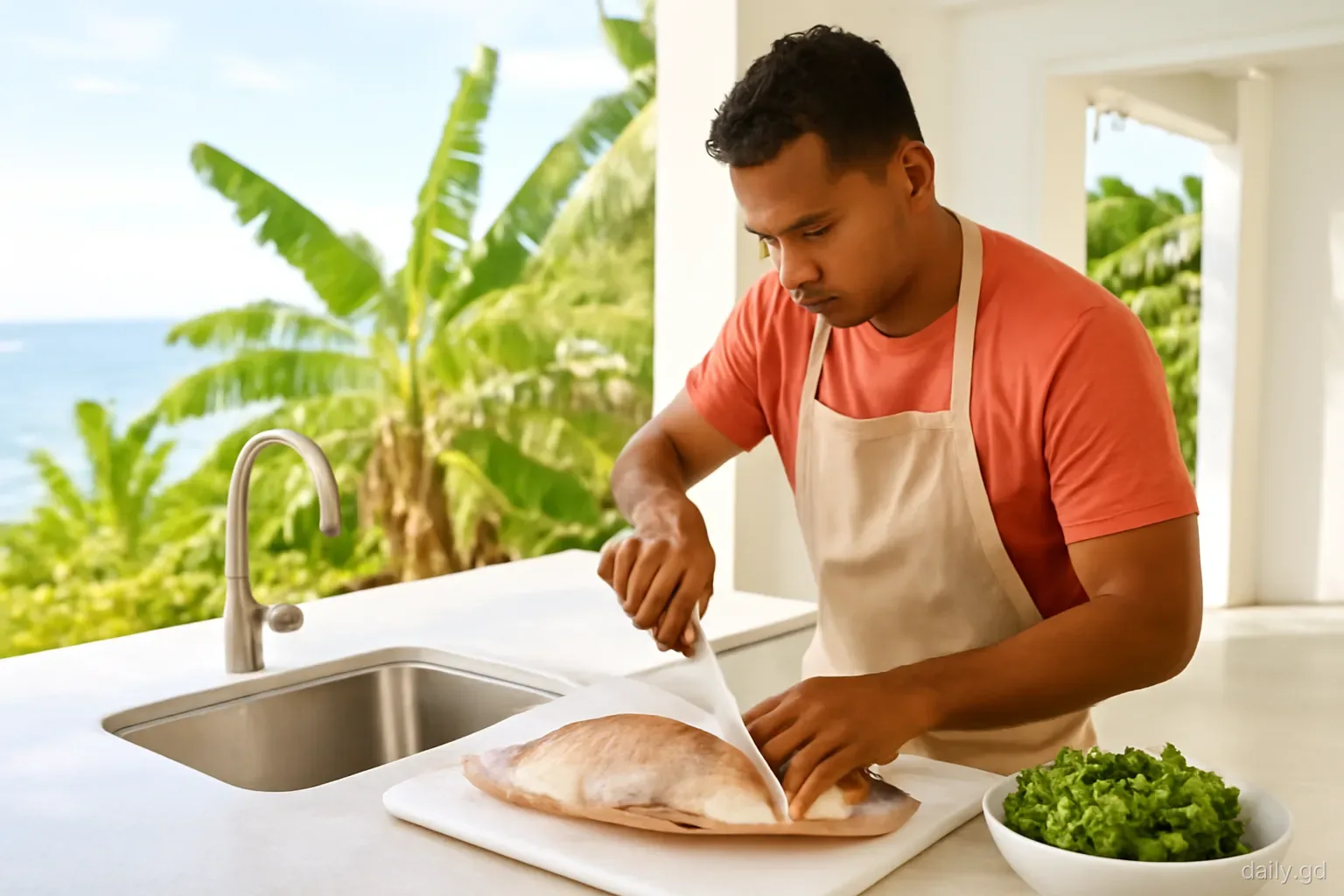
Many vendors will scale and gut for you, but it is worth knowing how. Work outdoors or over a large sink, since scales fly:
- Rinse the fish in cold water. Hold it firmly by the tail on a board or in the sink.
- Scrape off the scales with the back of a knife or a fish scaler, working from tail to head against the direction of the scales, including near the fins and belly.
- Cut off the sharp fins with kitchen scissors, taking care with spiny fins on fish such as snapper and grouper.
- Slit the belly from the vent to just below the head, pull out the guts and discard them, and rinse the cavity thoroughly, scraping out the dark blood line along the backbone.
- Remove the gills, which give a bitter taste if left in. Some cooks remove the head for frying and keep it for broth.
- Cut the fish into steaks across the body, or fillet it along the backbone, depending on the dish. Small fish such as jacks and robin are often cooked whole after cleaning.
- Wrap and dispose of scales and guts promptly; in the heat they attract flies and stray dogs within minutes.
The lime wash and the seasoning
Grenadian cooks almost always wash fish with lime or lemon juice and water before seasoning. Cut a lime or two in half, squeeze the juice over the fish and rub it with the cut halves, then rinse. Many say it removes any fishy smell and slime and brightens the flavour. It is not a substitute for freshness or proper cleaning, but it is a deeply rooted kitchen habit.
The seasoning that follows is usually built on green seasoning: chive, thyme, culantro, celery, garlic and seasoning peppers blended together. Rub it all over the fish and into slits cut in the sides of whole fish, add salt and black pepper, and some cooks add a little hot pepper, a pinch of saffron (turmeric) or a squeeze of fresh lime. For frying, allow at least thirty minutes in the fridge; for stews, a couple of hours or overnight lets the flavour penetrate further.
Delicate white fish needs less seasoning and less time than firm, rich fish such as tuna or kingfish, which can carry stronger flavours.
Three everyday ways to cook it
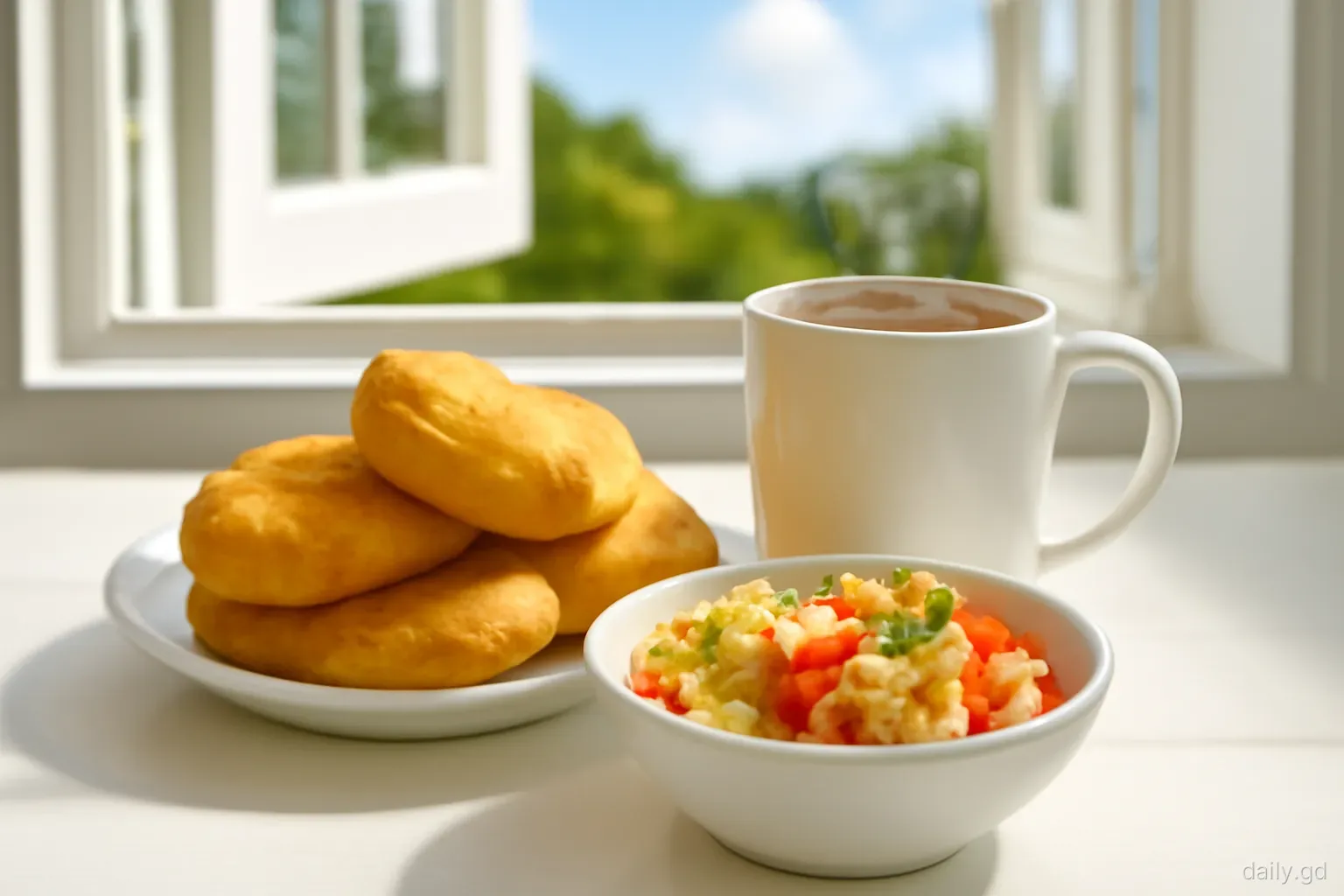
Fried fish. Seasoned steaks, fillets or whole small fish are dusted in flour, sometimes mixed with a little cornmeal and black pepper, then fried in hot oil until crisp and golden on both sides and cooked through. Fried fish with bakes, bread or provisions is a staple meal, and on Fridays and in Lent it appears in many homes.
Fish broth. A light, nourishing soup popular across Grenada. Fish heads and bones, or pieces of firm fish, simmer with water, onion, garlic, thyme, chive, a whole hot pepper and green fig, provisions or dumplings. Some cooks add pumpkin or christophene, and a squeeze of lime at the end. It is the classic use for heads and smaller fish and is often eaten as a meal on its own.
Stew fish. Seasoned fish is lightly fried or browned, then simmered in a sauce of onion, tomato, sweet pepper, garlic and green seasoning, sometimes with a little browning or coconut milk. Firm fish holds together best. It is served with rice, provisions or bakes, and leftovers make a good next-day lunch.
Which fish for which dish
Tuna. Firm and meaty, ideal cut into steaks for frying, grilling or stewing. Avoid overcooking, which dries it out.
Mahi-mahi, called dolphin locally. Mild white flesh, excellent fried or grilled. It has nothing to do with the mammal.
Kingfish and similar larger fish. Firm steaks that suit frying, stewing and barbecuing. Often sold in slices by weight.
Snapper and grouper. Prized white fish, good whole, fried or steamed, and in broth.
Jacks, robin and small fish. Inexpensive and tasty, usually cleaned and fried whole or used in broth. They have more bones, so eat with care.
Flying fish. Seasonal around the region and good fried, though supply in Grenada varies.
Ask the vendor. Availability changes with season and weather, so the best approach is to ask what came in today and how the vendor would cook it. Fishermen and market sellers usually have firm opinions and are generous with them.
Storage, freezing and safety
Get fish into the fridge as soon as you reach home, and cook it the same day or the next if possible. For longer storage, clean and portion it first, pat it dry, wrap each portion tightly in freezer bags with as much air pressed out as you can, label it with the date and freeze. Fish frozen this way keeps well for a few months. Some households freeze portions already seasoned, ready to thaw and fry.
Thaw frozen fish in the fridge overnight rather than on the counter, where Grenadian heat quickly warms the outside while the middle is still frozen. During power cuts, keep the freezer door closed; a full freezer stays cold for a good number of hours. If fish thaws completely and warms, cook it promptly or discard it.
Ciguatera, a form of food poisoning linked to certain large reef fish such as barracuda in parts of the Caribbean, is less of a concern with the open-water fish most commonly sold in Grenada, such as tuna and mahi-mahi. Follow local advice from fishermen and vendors about which species to avoid, and be cautious with very large reef predators.
Common mistakes
Leaving fish in a hot car. Bring a cool bag with ice whenever you go to buy fish.
Forgetting the gills. Gills left in give broth and whole fried fish a bitter taste.
Overcooking tuna. It turns dry and chalky. Cook steaks until just opaque.
Thawing on the counter. Fish warms fast in tropical heat. Thaw in the fridge or under cold running water.
Wasting the head and bones. They make the best broth and stock. Freeze them if you are not making broth that day.
Frying in oil that is not hot enough. Fish fried in lukewarm oil soaks it up and turns soggy. Wait until a pinch of flour sizzles at once before adding the fish, and do not crowd the pan.
Frequently asked questions
Why do Grenadians wash fish with lime?
Washing fish with lime or lemon juice and water is a long-standing Caribbean kitchen habit said to remove slime and any fishy smell and freshen the flavour before seasoning. It is not a replacement for buying fresh fish and cleaning it properly, but most local cooks consider it an essential step.
What is fish broth in Grenada?
Fish broth is a light soup of fish heads, bones or pieces simmered with onion, garlic, thyme, chive, hot pepper and green fig, provisions or dumplings. It is popular across Grenada as a nourishing everyday meal and is a good way to use fish heads and smaller fish.
How long can fresh fish stay in the fridge?
Ideally cook fresh fish the same day or the next. If you need longer, clean, portion and freeze it promptly, wrapped tightly with air pressed out. Frozen properly, it keeps for a few months. Thaw it in the fridge rather than on the counter.
Is mahi-mahi the same as dolphin in Grenada?
Yes. In Grenada and across the Caribbean, mahi-mahi is commonly called dolphin or dolphin fish. It is a fish with mild white flesh and has no relation to the marine mammal. It is widely sold and excellent fried, grilled or stewed.
How do you remove the strong smell after cleaning fish?
Rinse surfaces and boards with water and a little vinegar or lime juice, then wash with soap. Rub hands with lime or lemon and salt. Dispose of scales and guts outside quickly in a sealed bag, as the smell and flies build up fast in warm weather.