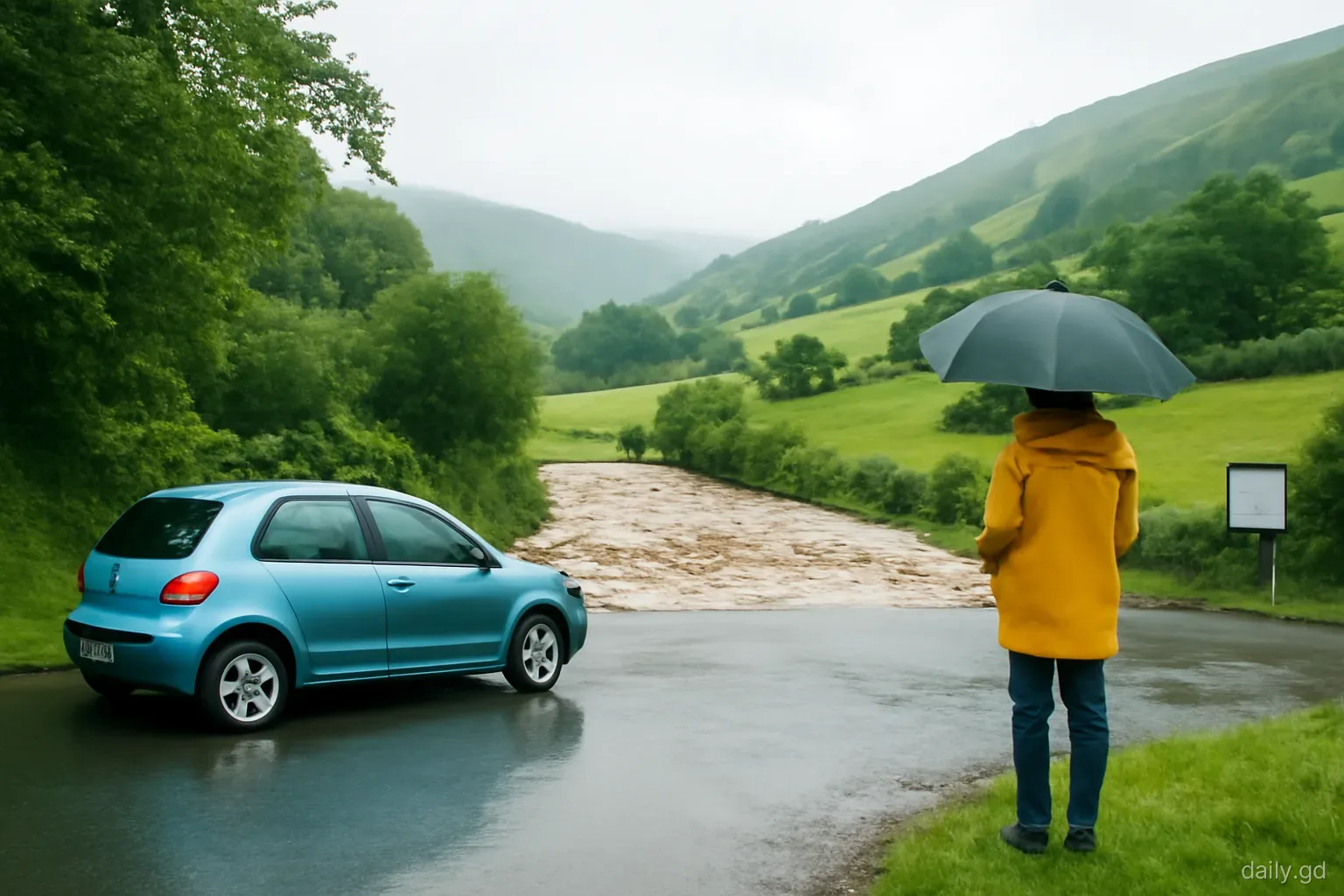
Most rain in Grenada passes quickly: a dark cloud, ten minutes of downpour, then sun and steam rising from the road. But several times each rainy season, a tropical wave or a slow-moving trough sits over the island and drops heavy rain for hours. Ghauts that are dry most of the year turn into brown torrents within minutes, low roads flood, and earth and rocks slide onto hillside roads in parishes from St John and St Mark to St Andrew and St David.
These days rarely make international news, but they disrupt work, school and the evening commute, and they cause real injuries when people try to cross water they cannot judge. This piece is about the everyday decisions on a heavy rain day: whether to set out, which routes to avoid, how to drive or walk through it, and what to keep at home and in the car.
Why flooding happens so fast here
Grenada is small and steep. Rain that falls on the central mountains around Grand Etang reaches the coast within an hour through dozens of short rivers and ghauts. In the dry season these channels are trickles or dry beds; in heavy rain they fill quickly, carrying mud, branches and rubbish. Where they pass under roads through culverts that are too small or blocked by debris, water backs up and spills across the road. Low points in towns, where several drains meet, flood the same way.
Landslides follow a similar logic. Slopes cut away for roads and house lots, especially in clay soils, become saturated after several hours of rain and give way. Road edges collapse into ravines, boulders roll onto carriageways, and sometimes whole banks slip. The risk is highest not during the first shower but after prolonged rain, and it can continue for a day or more after the rain stops as water keeps draining through the soil.
Places that need extra care
Every community has its own known spots, and residents usually know them well. In general, take extra care around these kinds of places, and ask neighbours where water collects locally.
- River crossings and fords in rural areas, especially where a road dips to a stream bed rather than crossing on a bridge.
- Low coastal roads near river mouths, where rivers meet high tide and back up.
- Town centres with old drains, including parts of St George's and Grenville, where streets can fill briefly in very heavy downpours.
- Hillside roads with cut banks, such as stretches of the road over the mountain through Grand Etang and roads in the interior of St John, St Mark and St Andrew.
- Construction sites and new roads, where exposed soil washes onto the road and fresh cuts are less stable.
- Areas with history. If a spot flooded or slipped in previous storms, it will likely do so again.
Deciding whether to travel
Check before setting out. The Grenada Meteorological Service issues flash flood watches and warnings when heavy rain is expected, and these are carried on radio and by NaDMA. A warning means flooding is happening or imminent; it is a good reason to delay non-essential travel.
Leave earlier, not later. If rain is building in the afternoon and you need to get home, it is usually better to leave work early than to wait for it to stop. Roads deteriorate as the evening goes on, and darkness hides hazards.
Know an alternative route. Many journeys in Grenada have only one or two practical roads. Knowing the alternative, even if it is longer, can save hours if a landslide blocks the usual way.
Accept that buses may stop. Route bus drivers may stop running on certain routes in severe weather, and those still running fill quickly. Have a back-up plan for children coming home from school.
Wait it out if you are safe. If you are at work, school or a friend's house in a safe building, staying put for an hour or two often means the worst water has drained from the roads by the time you leave.
If you are driving in it
Grenada's narrow, winding roads already demand attention. In heavy rain, visibility drops, the road surface turns slick with oil and mud, and other drivers behave unpredictably.
- Slow down well below the usual speed, switch on headlights and keep a longer gap from the vehicle in front.
- Never drive into moving water across a road. Water deeper than the middle of a tyre can stall an engine, and fast-flowing water much shallower than that can push a car sideways.
- If you cannot see the road surface or the edge of the road, stop and wait. Edges may have washed away.
- Watch the banks on hillside roads for small stones and trickles of mud; these often come before a larger slide. Do not stop directly beneath a steep bank.
- If a road is blocked, turn back rather than trying to squeeze past debris near a drop.
- After the rain, test your brakes gently, since wet brakes are less effective for a short while.
On foot and at home
Pedestrians face the same water with less protection. Do not walk through flowing water across a road or path; even shin-deep water can knock an adult off their feet if it is moving fast, and manhole covers or drain grates may have lifted underneath. Children are especially at risk around ghauts and drains after rain, when water looks exciting. Remind them to stay away, and walk with younger ones.
At home, keep drains and gutters around the house clear before the rainy season, and do not throw rubbish into ghauts and drains, because blocked channels are a major cause of local flooding. If your house sits near a river or ghaut, keep valuables and electrical items off the floor in the rainy season, know which room is highest, and have your grab bag ready. If water starts entering, switch off electricity at the main switch if you can do so safely and move upstairs or to higher ground. Report blocked drains and culverts to the Ministry responsible for infrastructure and to your parliamentary representative's office, since repeated reports help get them cleared.
Mistakes that cause injuries
Trying to cross a flooded ford. This is the most common cause of serious incidents in floods across the Caribbean. If the water is moving and you cannot see the bottom, do not cross.
Stopping to look at a landslide. Slopes that have slipped once can slip again. Move on, or turn back.
Assuming the worst is over when rain stops. Rivers may keep rising for an hour after rain stops as water drains from the hills, and saturated slopes remain unstable.
Ignoring small signs. Cracks appearing in a yard, tilting fence posts or new seepage from a bank behind the house are signs of ground movement. Get advice early.
Parking in a ghaut or drain bed. Dry channels look like convenient parking in the dry season. A heavy shower upstream can fill them with fast water in minutes, carrying vehicles with it.
Sheltering under trees in thunder. Lightning accompanies many heavy rain events. A solid building or a closed car is far safer than standing under a tree or a bus shed made of metal sheeting.
What to keep at home and in the car
Heavy rain days are short-notice events. A small stock of supplies in the house and vehicle means a delay becomes an inconvenience rather than a crisis.
- In the car: a torch, a phone charger, drinking water, a light rain jacket, a small first aid kit and a snack. Being stuck behind a landslide for two hours is common enough to plan for.
- In the car: a reflective triangle or bright cloth to warn other drivers if you have to stop on a narrow road.
- At home: torches, candles kept away from curtains, spare batteries and a power bank, since heavy rain often brings power cuts.
- At home: a few days of drinking water and simple food, in case flooding or slides cut the road to the shops or affect the water supply.
- For children: make sure schools have a current contact number and agree who collects them if roads close during the day.
- For work: talk to employers in advance about what happens on severe weather days, so nobody feels pressured to make a dangerous journey.
Frequently asked questions
What is the difference between a flash flood watch and a warning?
A watch means conditions could lead to flash flooding, so stay alert and be ready to change plans. A warning means flooding is happening or about to happen in the area, and you should avoid travel near rivers, ghauts and low-lying roads.
When are heavy rain events most likely in Grenada?
They can happen at any time, but they are most common in the rainy season from about June to December, when tropical waves and troughs pass through regularly. Some of the heaviest rain comes from systems that never become named storms.
Do schools close during heavy rain?
Schools may close or dismiss early when severe weather is expected or roads become dangerous. Decisions come from the Ministry of Education and are announced through radio and official channels, so check before setting out with children.
Is it safe to drive the Grand Etang road in heavy rain?
It is the main route across the island and is used daily, but it is winding and climbs through areas with steep banks and frequent rain. In prolonged heavy rain, consider waiting, or using the coastal route if it is practical and open.
Who should be told about a blocked drain or culvert?
Report it to the Ministry responsible for infrastructure and to your local representative's constituency office. NaDMA and district disaster committees also want to know about recurring flooding points, especially before the hurricane season.