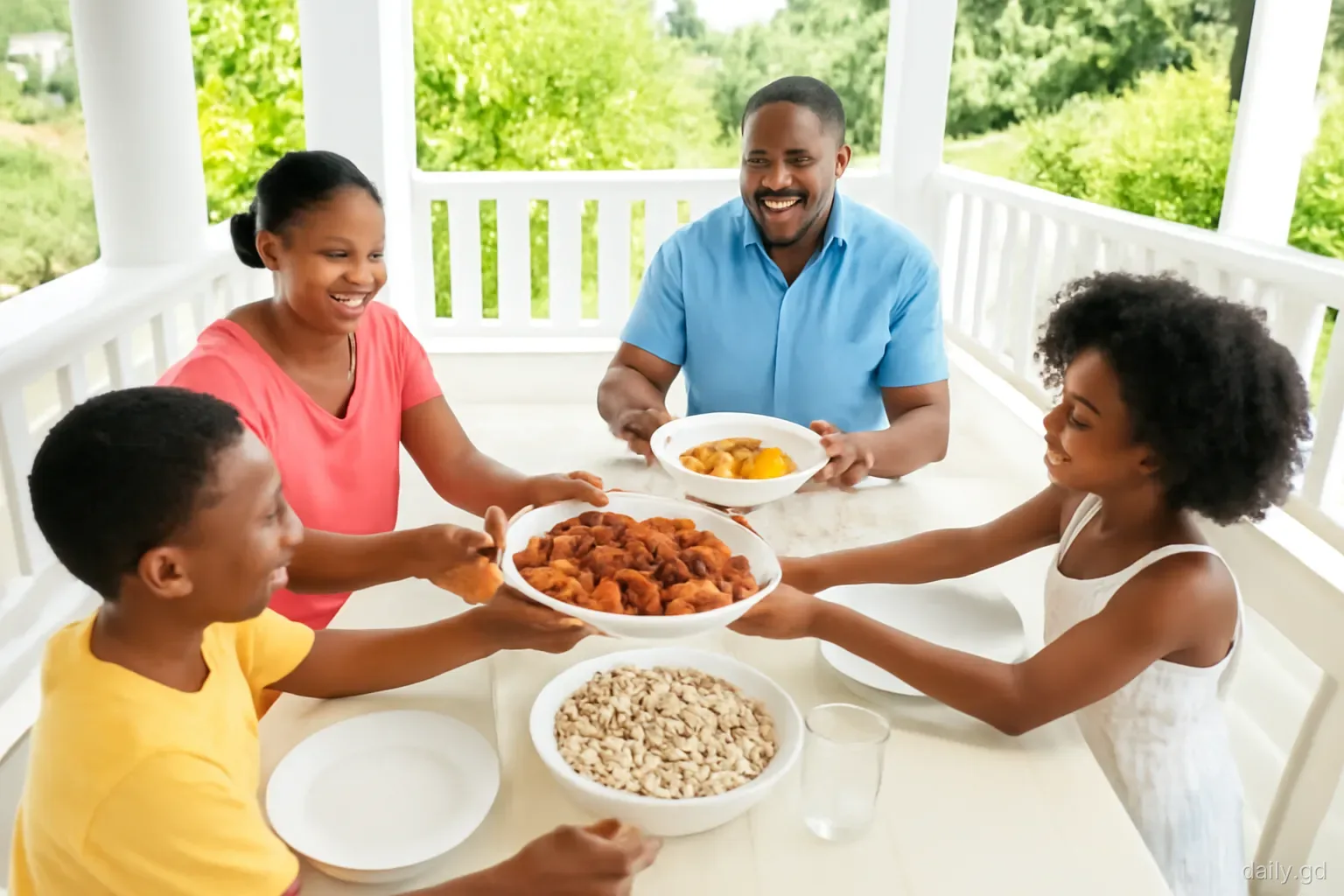
Sunday lunch is the biggest home-cooked meal of the Grenadian week. After church, the house fills with the smell of browned chicken, coconut-rich rice and peas and a macaroni pie crisping in the oven, and family who live nearby find a reason to drop in. The plate is generous and varied: a stew, a rice dish, a baked dish, provisions and a salad, with a jug of homemade juice on the side.
None of it is difficult, but timing it so that everything is hot at once takes a little planning. This guide breaks the meal into its usual parts, explains how each is typically cooked in Grenadian homes, and ends with a timeline. Quantities are for roughly six people; families adjust everything by eye, and so can you.
Stewed chicken: the centre of the plate
Grenadian stewed chicken, sometimes called brown stew chicken, starts the day before. Cut a whole chicken into pieces, wash it with lime or vinegar and water as is customary in Caribbean kitchens, then season it with two or three tablespoons of green seasoning, salt, black pepper, a little garlic and, if you like, a spoon of ketchup or a dash of Worcestershire sauce. Leave it covered in the fridge overnight.
On Sunday, the key step is browning. Heat a little oil in a heavy pot, add a tablespoon or two of brown sugar and let it melt and darken to a deep amber, almost burnt, stirring constantly. Add the chicken pieces quickly, turning them in the caramel until coated and coloured. This is what gives the dish its colour and slight bittersweet depth. Bottled browning is a shortcut if the sugar method feels risky.
Once browned, add sliced onion, tomato, sweet pepper and a little water, cover and simmer for thirty to forty minutes until the chicken is tender and the sauce has thickened. Some cooks add carrots or potatoes to stretch the pot. A whole hot pepper dropped in and removed before serving gives flavour without much heat.
Rice and peas with coconut
Rice and peas in Grenada usually means rice cooked with red kidney beans or pigeon peas in coconut milk, seasoned with thyme, chive, garlic and often a piece of salted meat or pig tail. If using dried beans, soak them overnight on Saturday and boil them until tender before Sunday; this is the most time-consuming part, and many households cook beans in a pressure cooker to save gas.
To make the dish, soften onion and garlic in a little oil, add a spoon of green seasoning, the cooked beans with some of their liquid, coconut milk and enough water to cook the rice. Season with salt, add a sprig of thyme and a whole hot pepper, and bring to the boil. Stir in washed rice, reduce the heat, cover tightly and cook until the liquid is absorbed and the rice is tender. Leave the lid on for a few minutes before fluffing with a fork.
Pigeon peas are the Christmas favourite, red beans the year-round standard. Either way, the rice should be moist but separate, never mushy.
Macaroni pie: the baked dish everyone waits for
Macaroni pie is the Caribbean cousin of macaroni cheese, firmer and sliceable rather than creamy. Boil a pound of macaroni in salted water until just cooked, drain and mix with grated cheddar, beaten eggs and evaporated milk. Season with black pepper, a little mustard, grated onion and sometimes a touch of hot pepper sauce or green seasoning. Pour into a greased baking dish, top with more cheese and bake until set and golden on top.
The eggs are what make it hold together in slices. Let it rest for ten minutes after baking before cutting, or it will slump. Cheese is one of the more expensive imported items in a Grenadian kitchen, so many households use a strong, sharp cheese, which gives more flavour per ounce. Leftover macaroni pie is excellent cold, and many people think it is better the next day.
Provisions, plantain and salad
Boiled provisions. A few pieces of yam, dasheen, sweet potato or green fig, peeled and boiled in salted water until tender, are served alongside. Oil your hands or wear gloves when peeling dasheen and green fig, as the sap can itch and stain.
Fried plantain. Ripe plantains, with skins turning black, sliced diagonally and fried until caramelised, add sweetness to the plate.
Potato salad. Boiled potatoes mixed with mayonnaise, onion, a little mustard and sometimes boiled egg, carrot and peas. In some families beetroot turns it pink.
Green salad or coleslaw. Lettuce, tomato and cucumber, or shredded cabbage and carrot, cut fresh just before serving so it stays crisp in the heat.
Callaloo. A pot of callaloo, cooked from dasheen leaves with coconut milk and seasoning, appears on many Sunday tables as a side. The leaves must be cooked thoroughly to avoid an itchy throat.
Something to drink
A Sunday lunch is incomplete without a homemade drink, chilled in the fridge from the morning. Bottled sodas appear too, but a jug of juice made from local fruit is cheaper, and making it is often a job handed to children. Common choices depend on the season and what is in the yard:
- Sorrel around Christmas, brewed with cinnamon, cloves and bay leaf.
- Golden apple juice, blended with water, lime and sugar and strained.
- Passion fruit juice, sharp and fragrant, a favourite through much of the year.
- Carrot juice, blended carrots with evaporated or condensed milk and nutmeg.
- Mauby, a bittersweet drink made from tree bark, liked by some and not others.
- Lime juice with plenty of sugar and ice, the simplest of all.
A timeline that works
The trick is to do most of the work the day before. A practical sequence for a lunch served around one o'clock:
- Saturday: buy provisions, herbs and chicken; make green seasoning; season the chicken and refrigerate; soak the beans; make juice and chill it.
- Saturday evening: boil the beans until tender, or pressure-cook them; boil potatoes for salad and refrigerate.
- Sunday morning, before church: grate cheese and boil the macaroni; mix and assemble the pie in its dish and refrigerate.
- About two hours before lunch: brown and stew the chicken.
- About one hour before: start the rice and peas; put the macaroni pie in the oven; peel and boil provisions.
- Thirty minutes before: finish the potato salad, fry plantain and cut the green salad.
- At the table: serve everything at once, with the juice straight from the fridge.
Common mistakes
Burning the browning too far. Sugar goes from amber to bitter black in seconds. Have the chicken ready beside the pot and add it as soon as the caramel darkens.
Mushy rice. Too much liquid or stirring after the rice goes in makes it gluey. Measure, stir once, cover and leave it. If the bottom catches slightly, many Grenadians treat the crust as a bonus rather than a failure.
Cutting macaroni pie too soon. Rest it for ten minutes so the egg sets.
Undercooked callaloo. Dasheen leaves need long enough in the pot; undercooked, they irritate the throat.
Seasoning on the day. Chicken seasoned an hour before cooking tastes flat next to chicken left overnight. If you forget on Saturday, season it first thing on Sunday morning and give it as long as you can.
Feeding a crowd on a budget, and using leftovers
A Sunday lunch for six or more does not need to be expensive. The costly items are meat and cheese; the rest is rice, beans, provisions, plantain and garden produce. Stretch the chicken by adding potatoes, carrots or dumplings to the stew, and make the macaroni pie with a strong cheese so that less goes further. Buying a whole chicken and cutting it yourself costs less than buying pieces, and local seasonal vegetables cost less than imported ones.
Leftovers are part of the plan. Stewed chicken and rice and peas make Monday lunch boxes. Leftover macaroni pie is eaten cold or warmed. Extra provisions can be fried the next morning with saltfish or onions. Cool leftovers quickly and refrigerate them within a couple of hours, since food left on the counter in Grenadian heat spoils fast, and reheat thoroughly until piping hot before eating.
Frequently asked questions
What is a typical Grenadian Sunday lunch?
A typical plate includes stewed or baked chicken, rice and peas cooked in coconut milk, macaroni pie, boiled provisions such as yam or dasheen, fried plantain, potato salad or green salad, and often callaloo. A homemade juice like sorrel, golden apple or passion fruit is served alongside.
How do you make chicken brown without bottled browning?
Heat a little oil in a heavy pot, add brown sugar and stir until it melts and turns deep amber, almost black. Immediately add seasoned chicken and turn it to coat. Work quickly, as the sugar burns fast. The caramel gives colour and a slightly bittersweet depth.
What is the difference between macaroni pie and macaroni cheese?
Macaroni pie uses eggs and evaporated milk to bind the pasta and cheese, so it sets firm enough to cut into slices after baking. Macaroni cheese is usually creamy, made with a white sauce. Caribbean macaroni pie is often seasoned with onion, mustard and pepper sauce.
Can rice and peas be made with tinned beans?
Yes. Tinned red kidney beans or pigeon peas save soaking and boiling time. Drain and rinse them, then cook as normal with coconut milk, seasoning and rice, adjusting the water since tinned beans add no extra cooking liquid. Many busy households do this every week.
Why does dasheen make hands itch?
Dasheen corms and leaves contain compounds that irritate skin and throat when raw. Oiling hands or wearing gloves while peeling, and cooking leaves and corms thoroughly, prevents the problem. Green fig sap can also stain and irritate, so the same precautions help.