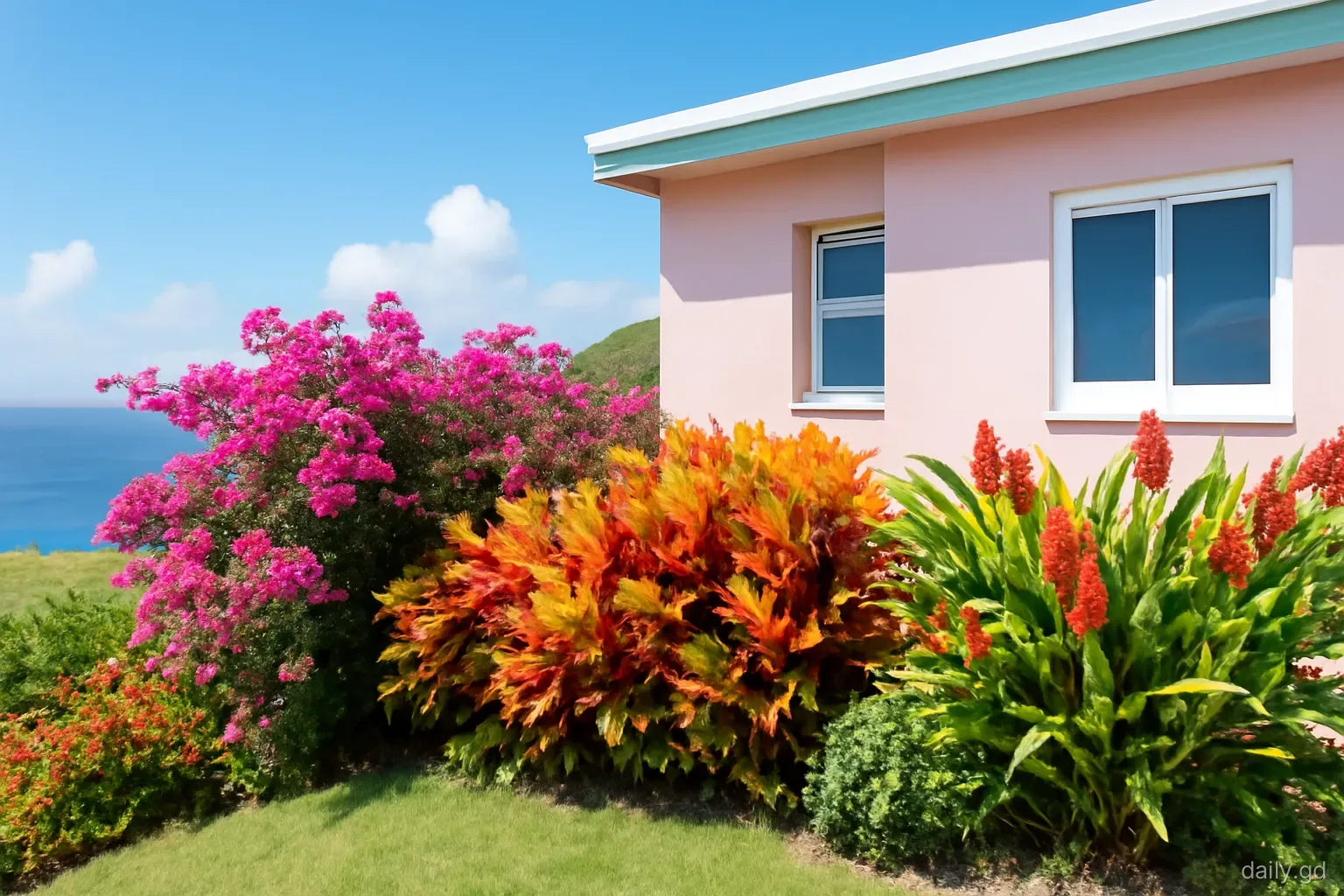
Drive through any Grenadian village and the same plants appear again and again: hedges of red and yellow crotons, bougainvillea spilling over walls, hibiscus by the gate, ginger lilies and heliconias in damp corners. They are popular for good reasons. They tolerate heat, recover from storms, root easily from cuttings, and can be shared among neighbours, so a new yard can be planted for very little money.
Choosing well matters, though. A yard on an exposed hilltop above Grand Anse faces salt spray and strong winds; a garden in the hills of St John is damp and shaded; a house on Carriacou faces a long dry season. This piece looks at the ornamental plants that do well in different Grenadian conditions, how to establish them, and the common choices that cause problems with pets, roots or maintenance.
Reliable plants for sunny yards
Hibiscus. The classic Caribbean shrub, in red, pink, orange, yellow and many hybrids. It flowers most of the year with sun and regular water, and grows from cuttings. It can suffer from mealybugs and aphids, so check new growth regularly.
Bougainvillea. Thrives in hot, dry, sunny spots and flowers best when slightly stressed. It is excellent for walls, fences and banks, but has sharp thorns, so keep it away from paths, gates and children's play areas.
Ixora. Compact shrubs with clusters of red, orange, pink or yellow flowers. Good for hedges and borders, and fairly tolerant of drought once established.
Crotons. Grown for their leaves, in every combination of red, yellow, orange, green and purple. Very tough, they handle sun and partial shade and make colourful hedges. Their sap can irritate skin, and they are toxic if eaten.
Frangipani. A small tree with fragrant flowers that drops its leaves in the dry season. Drought-tolerant and easy from cuttings.
Allamanda. A vigorous climber or shrub with large yellow trumpet flowers. Fast-growing and showy, but all parts are toxic.
Coastal gardens and salt spray
Many Grenadian homes are close to the sea, and salt spray carried by the trade winds scorches the leaves of sensitive plants. On exposed coastal plots, especially on the south and east coasts and on Carriacou, plant choice is crucial. Sea grape is the natural coastal shrub of the region, with large round leaves and clusters of edible grapes; it handles salt, wind and sandy soil and makes an excellent windbreak. Coconut palms are salt-tolerant but drop heavy nuts, so keep them away from parking areas and paths.
Other plants that cope well with salt include bougainvillea, oleander, frangipani, many succulents and agaves, and some ornamental grasses. A useful strategy is to plant a first line of tough, salt-tolerant shrubs on the seaward side and more delicate plants in their shelter. Hosing down leaves with fresh water after a period of strong onshore wind helps, if water supply allows. Avoid planting directly in sand without improving it with compost or topsoil, as most plants struggle to hold water and nutrients there.
Shady and damp spots
Gardens in the hills, on the windward side and under large trees need different plants. These thrive where hibiscus and bougainvillea would struggle.
- Heliconias, with their dramatic hanging or upright bracts in red, orange and yellow. They like moisture and partial shade and spread through underground stems.
- Ginger lilies, including red ginger and torch ginger, which do well in damp, rich soil and provide cut flowers.
- Anthuriums, which thrive in shaded, humid spots and in pots on verandas. Grenada's wetter interior suits them well.
- Ferns and philodendrons for deeply shaded corners and under trees.
- Begonias and impatiens for colour in shaded beds and pots.
- Dracaenas and cordylines, tall foliage plants that tolerate shade and are often used as living fences and boundary markers.
Planting and establishing a new bed
Plants establish fastest when planted at the right time and given a good start. These steps apply to most ornamentals in Grenada.
- Plan around the seasons. The start of the rainy season, around June, is the easiest time to plant, because natural rainfall does much of the watering. Planting in the dry season is possible but needs regular watering for several weeks.
- Prepare the soil. Dig in compost or well-rotted manure, especially in heavy clay or sandy soils. Remove roots of grass and weeds that will compete with new plants.
- Take cuttings. Many ornamentals, including hibiscus, crotons, bougainvillea and frangipani, root from cuttings. Take a healthy stem, remove lower leaves, and plant in moist soil in partial shade until roots form.
- Water deeply but not constantly. Encourage deep roots by soaking the soil every few days rather than sprinkling daily.
- Mulch around plants with dried grass, leaves or coconut husk to keep soil moist and suppress weeds.
- Prune lightly after flowering to keep shrubs compact and encourage new blooms.
Plants and pets, children and storms
Several of Grenada's most common ornamentals are toxic if eaten. Oleander is highly poisonous in all parts, to people and animals. Crotons, allamanda, dieffenbachia (dumb cane), and some lilies can cause illness, and sago palms are especially dangerous to dogs. Most pets ignore these plants, but puppies and young children chew things. If you have either, check what is already in the yard, place toxic plants out of reach or remove them, and know where the nearest vet is in case of accidental poisoning.
Storm resilience also matters when choosing plants. Large ornamental trees close to the house can fall onto roofs or power lines in a hurricane. Plants with shallow roots and heavy canopies are most at risk. Shrubs and hedges generally recover quickly from storm damage, often resprouting within weeks, which is one reason crotons, hibiscus and ixora are so widely planted. Avoid planting trees directly under power lines, and keep large species several metres away from buildings and septic systems.
Common mistakes in Grenadian yards
Planting the wrong plant in the wrong place. Sun lovers planted in shade grow leggy and flower poorly; shade lovers in full sun scorch. Match the plant to the spot before buying.
Overwatering in the rainy season. Waterlogged soil kills more plants than drought in some parts of Grenada. Make sure beds drain well and avoid watering after heavy rain.
Ignoring mature size. A small bougainvillea or ficus can grow into a large, demanding plant within a few years. Plant with the final size in mind.
Invasive plants. Some ornamentals spread aggressively and escape into surrounding land. Ask local gardeners or the Forestry Department which species to avoid.
Hedges that block sight lines. Croton and ixora hedges at the edge of a yard can hide the road from drivers pulling out of a gateway. Keep hedges by the gate and at bends low enough to see over.
Planting over pipes and septic tanks. Roots of vigorous shrubs and trees find water and nutrients in drains and soakaways. Keep big plants well clear and use shallow-rooted ground covers above septic systems.
Buying plants and sharing cuttings
Grenada has a strong habit of sharing plants, and much of the colour in older village yards came from cuttings passed between neighbours, church members and relatives. Asking politely for a piece of a hibiscus or croton you admire is rarely refused, and many gardeners will show you how to root it. This is the cheapest way to fill a new yard, and it guarantees plants that already grow well in your local conditions.
For particular varieties, larger plants or quick results, plant nurseries and garden centres around St George's and in the main towns sell ornamentals, pots and potting mix, and hardware stores stock basic tools and fertiliser. Prices vary widely depending on size and variety; small rooted cuttings can cost very little, while mature specimen plants and palms cost much more. Agricultural and flower shows are good places to see what grows well locally and to buy from growers. Whatever the source, check new plants for mealybugs, scale and ants before planting them out.
Frequently asked questions
What are the easiest flowering plants to grow in Grenada?
Hibiscus, ixora, bougainvillea and frangipani are among the easiest, especially in sunny spots. Crotons are easy for foliage colour. Most root from cuttings, so neighbours can often share pieces to get you started.
Which plants cope best with salt spray?
Sea grape, coconut palms, bougainvillea, oleander, frangipani and many succulents cope well with salt and wind. Plant a hedge of tough shrubs on the seaward side to shelter more delicate plants behind.
Are crotons poisonous to dogs and cats?
Crotons contain irritating sap and are considered toxic if eaten, causing mouth irritation and stomach upset. Most pets leave them alone, but watch puppies and kittens, and contact a vet if you suspect an animal has eaten part of one.
When is the best time to plant ornamentals in Grenada?
The start of the rainy season, around June, is ideal because regular rainfall helps new plants establish. You can plant in the dry season if you can water reliably for the first few weeks.
How close to the house should trees be planted?
Keep large trees several metres from the house, power lines and septic systems. In hurricane-prone Grenada, falling branches and trees are a major cause of roof damage, so place large species where they cannot reach the house if they fall.