When a hurricane warning is issued for Grenada, most households work through a familiar list: shutters, water, food, batteries, documents. Pets and yard animals are often left until the last hour, if they are thought about at all. After Hurricane Ivan in 2004 and Hurricane Beryl in 2024, animal welfare volunteers reported large numbers of lost, injured and abandoned animals, many of which could have been kept safe with a little planning.
A storm plan for pets does not need to be complicated, but it needs to be made before the season starts. This piece covers deciding where animals will shelter, what to pack, how to look after chickens, goats and other yard animals, how to keep pets calm during the storm, and what to do if a pet goes missing afterwards.
Start with where they will stay
The first question is where your animals will be during the storm. Many public emergency shelters in Grenada cannot take animals because of space, hygiene and safety, so do not assume you can bring a dog or cat. Ask your district disaster committee before the season, and make a plan that does not depend on a shelter accepting animals. For most pet owners, the best option is to keep pets with them at home if the house is strong, or to arrange in advance to go to a friend or relative with a sound house who is willing to take the animals too.
Inside the house, choose an interior room without windows, such as a bathroom or hallway, where pets can be kept during the worst of the wind. Dogs and cats should never be left outside, chained or penned in a yard during a storm. Flying debris, falling trees and floodwater kill animals every hurricane season. If you must leave pets behind, which should be a last resort, leave them indoors in the safest room with plenty of water and food, never tied up.
The pet grab bag
Pack a separate bag for each animal, or one for the household's pets, and keep it with your own grab bag from June to November.
- Food for at least a week, in sealed waterproof containers, plus a manual can opener if needed.
- Drinking water for each animal, with bowls. Pets drink more when stressed and hot.
- Medicines and copies of vaccination records, especially rabies vaccination, in a waterproof bag.
- A strong lead, collar and identification tag with your current contact details. Ask your vet about microchipping.
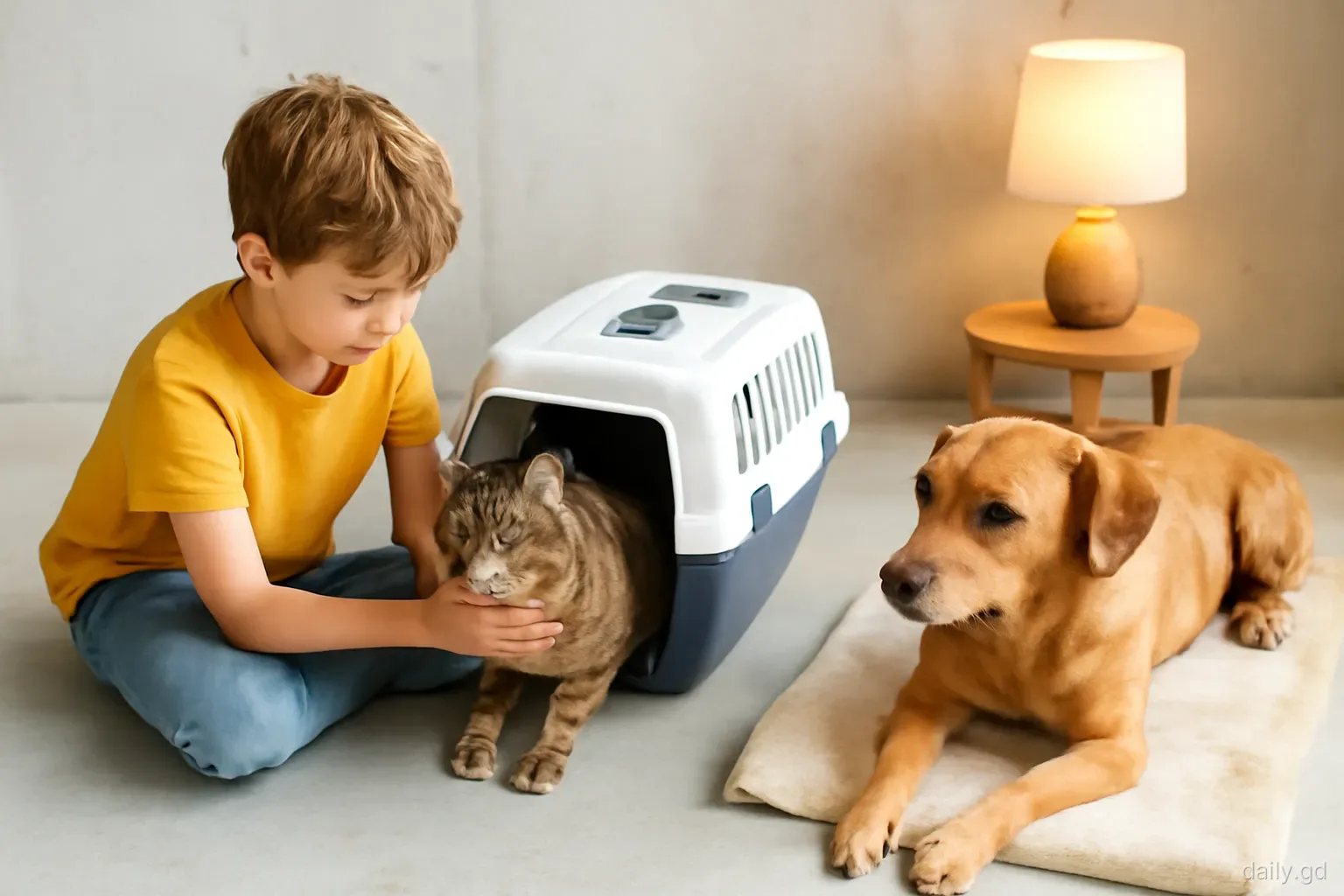
- A carrier or crate for cats and small dogs, large enough to stand and turn around in, labelled with your name.
- Litter, a small litter tray and bags for cats; poop bags and old towels for dogs.
- A recent photograph of each pet, with you in the photo if possible, to help prove ownership if they get lost.
- A familiar blanket or toy to reduce stress.
Chickens, goats and other yard animals
Chickens. Move poultry into the strongest coop or shed you have, or into crates in a sheltered building. Secure doors and roofing, and make sure there is ventilation. Coops made of loose galvanise sheets can become dangerous in high winds.
Goats and sheep. Many Grenadian households keep goats or sheep on a tether. Do not leave animals tethered in open fields or near ghauts and rivers, where they can be strangled by ropes or drowned in floods. Move them to higher ground, into a sturdy pen or shed, or untie them in a safe enclosed area.
Cattle and pigs. Move animals to higher ground and away from trees and power lines. Make sure they have access to clean water and food that will not be swept away.
Rabbits and caged birds. Bring cages indoors to a safe room, cover them partly to reduce stress, and provide food and water.
Identification. Mark livestock in a way that helps you identify them if they stray after the storm, and take photographs before the season.
During the storm
Animals sense changes in air pressure and are often frightened by wind noise and the sound of debris hitting the house. Dogs may try to hide, pace or bark, and cats often look for small spaces. Keep them in the safe room with you if possible, with a familiar blanket and water. Cats are safest in a carrier or a closed bathroom where they cannot escape and hide somewhere dangerous. Speak calmly, and avoid punishing anxious behaviour.
Keep doors and windows closed throughout the storm, including during the calm of the eye, when animals and people are tempted to go outside. The wind returns, often from the opposite direction, very quickly. Keep pets on a lead or in carriers if you need to move between rooms. If flooding begins, move animals with you to higher floors or higher ground. Never leave a dog tied up as water rises.
After the storm
The hours and days after a hurricane can be the most dangerous time for pets, as fences are down, debris is everywhere and animals are disoriented.
- Keep pets indoors or on a lead until you have checked the yard and surroundings. Fences, gates and walls may be damaged.
- Check the yard for hazards: broken glass, nails, fallen power lines, standing water and dead animals. Keep pets away from floodwater, which can carry disease including leptospirosis.
- Give clean drinking water only. Do not let animals drink from puddles or flooded areas.
- Watch for injuries, signs of stress or illness, and contact a vet if needed. Some vets may be closed or operating reduced hours after a major storm.
- Check on neighbours' animals, especially those of elderly or absent owners.
- Repair fences and shelters before letting animals roam the yard again.
If a pet goes missing
Search early. Lost pets often hide close to home. Search your yard, neighbours' yards and nearby bush calmly, calling their name, especially in the early morning and evening.
Spread the word. Share photos and details in local community groups and on social media pages for lost and found pets in Grenada. Tell neighbours, bus drivers and shopkeepers.
Check with vets and rescuers. Contact local vets and animal welfare volunteers, who often hear about animals found after storms.
Keep proof of ownership. Photographs, vaccination records and microchip details help prove that a found animal is yours.
Keep looking. After major storms, pets sometimes turn up weeks later, sheltered by neighbours or living rough near their old homes. Leave water and food out near the house, and keep checking community groups.
Help others. If you find a lost animal, keep it safe, check for a tag or microchip, and post a photo in local groups. Many owners are searching while dealing with damaged homes.
Before the season: health and identification
The weeks before June are the time to prepare your animals, not the day before a storm. Make sure vaccinations are current, especially rabies, since animals may come into contact with wildlife and other animals after a storm, and some friends or boarding places require proof. Stock up on any regular medicines and parasite prevention for at least two to three months, because supplies may be disrupted after a hurricane. Ask your vet about microchipping, which helps reunite lost animals with their owners.
Take clear photographs of each animal from several angles, and note distinctive markings. Get cats and small dogs used to their carriers before the season, by leaving the carrier open in the house with a blanket and treats inside. An animal that already treats the carrier as a safe place is much easier to manage in a stressful situation. Agree with a friend or neighbour that each of you will look after the other's animals if one household cannot get home before a storm, and exchange keys and instructions.
Mistakes that put animals at risk
Leaving animals tied outside. Chained dogs and tethered goats are among the most common animal casualties in storms. Bring them in or move them to secure shelter.
Assuming a shelter will take them. Many public shelters cannot accept animals. Have a plan that does not depend on one.
Forgetting food and water. Shops may be closed for days after a storm. A week's supply of food and water for each animal avoids a crisis.
Letting pets out too soon. Damaged fences, debris and downed lines make the immediate aftermath dangerous. Keep animals contained until you have checked the area.
Leaving it until the warning. Carriers, food, medicines and arrangements with friends take time. Prepare in May and June, not the night before.
Frequently asked questions
Do emergency shelters in Grenada accept pets?
Many public shelters cannot accommodate animals. Ask your district disaster committee before the season and plan to keep pets at home in a strong house or with friends or family who can take them.
Should dogs be left outside during a hurricane?
No. Dogs should never be left chained or penned outside during a storm. Flying debris, falling trees and floodwater are serious dangers. Bring them indoors to a safe interior room.
What should be in a pet emergency kit?
At least a week of food and water, bowls, medicines, vaccination records, a lead and collar with ID, a carrier for cats and small dogs, litter supplies, a familiar blanket and a recent photograph of each pet.
How can goats and chickens be protected in a storm?
Move chickens into the sturdiest coop or a sheltered building, and do not leave goats tethered in open fields or near rivers. Move livestock to higher ground or secure pens away from trees and power lines.
What should be done if a pet is lost after a storm?
Search nearby areas calmly, share photographs in local community and lost pet groups, and contact vets and animal welfare volunteers. Keep vaccination records and photographs ready to prove ownership if your pet is found.