Open the fridge in a Grenadian kitchen and there is a good chance you will find a jar of something green and pungent near the front. Green seasoning, a blend of fresh herbs, peppers, onion and garlic, is the base flavour of much home cooking on the island. It goes onto chicken and fish before they are cooked, into stews and soups, into rice and peas, and into the pot of almost any dish that calls for depth without heat.
Every family has its own version, and nobody measures precisely. What follows is a reliable starting point using herbs that are easy to find at Grenadian markets, plus the reasoning behind each ingredient, so that you can adjust it to your own taste and to what the vendors have that week.
The core herbs
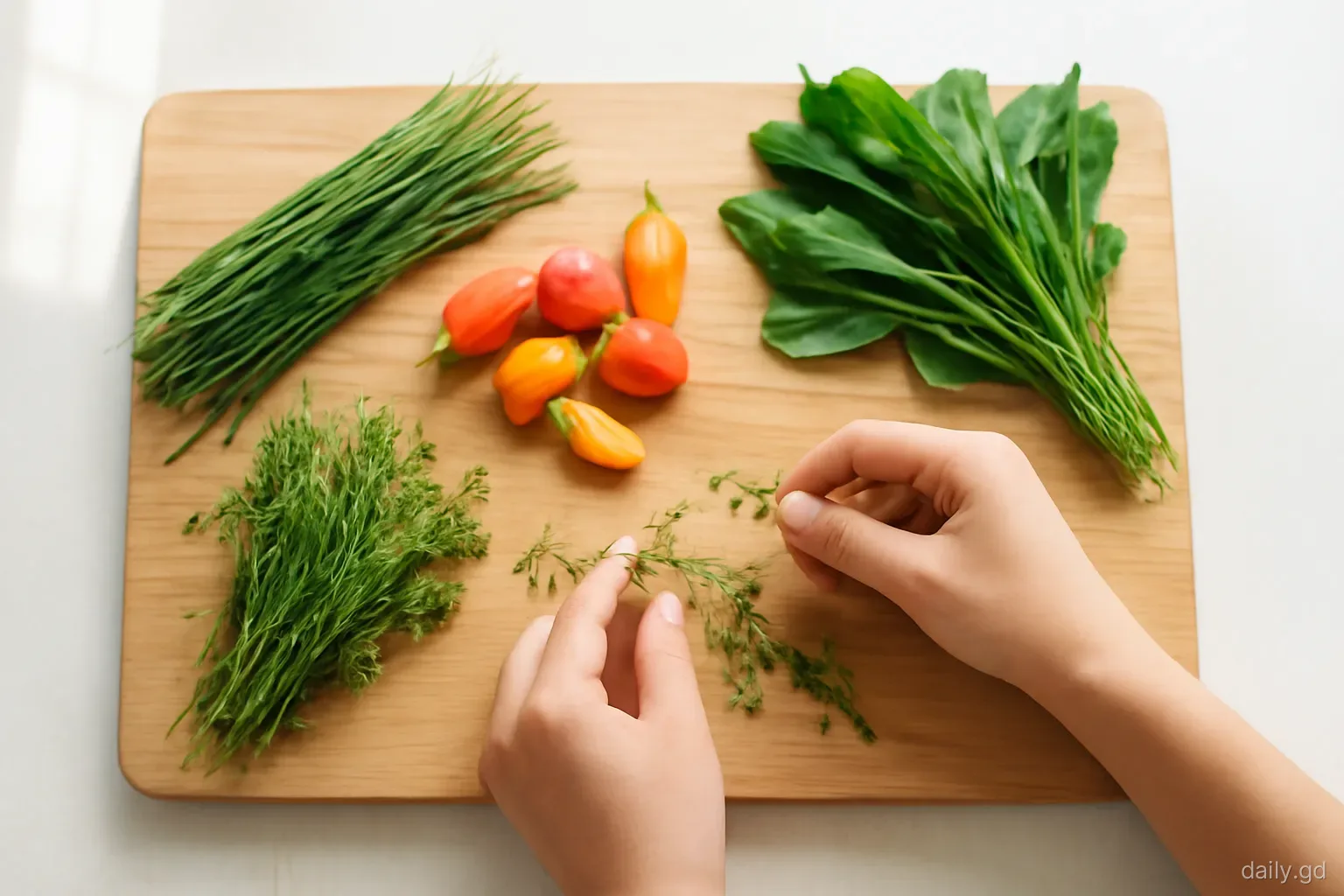
Chive. In Grenada "chive" usually means what other countries call spring onion or scallion, sold in bundles at every market. It gives the blend its mild onion freshness and much of its green colour.
Thyme. Fresh thyme, with small leaves on woody stems, is essential. Strip the leaves from the stems rather than blending the woody parts. Many cooks also use the broad-leaved herb sometimes called Spanish thyme, big thyme or French thyme locally, which has a stronger, almost oregano-like scent; use it more sparingly.
Culantro. Known in the region as shado beni, chadon beni or bandania, culantro has long serrated leaves and a flavour like a stronger, earthier coriander. It is the herb that most clearly marks Caribbean green seasoning.
Celery. Local celery is a leafy, thin-stemmed plant with a stronger taste than the thick celery sold abroad. Both stems and leaves go in.
Parsley and basil. Optional. Some cooks add flat-leaf parsley, and a few add a little local basil for sweetness.
The supporting cast
Seasoning peppers. Small, wrinkled peppers that look like hot peppers but have almost no heat. They add fruity aroma and are a defining Grenadian ingredient. Make sure the vendor knows you want seasoning peppers, not hot ones.
Garlic. A whole head for a full batch is common. Garlic helps the seasoning keep and gives backbone to meat dishes.
Onion. One medium onion, roughly chopped. Some cooks leave it out to make the seasoning last longer and add fresh onion when cooking instead.
Hot pepper. Optional and in small amounts. Many households keep the green seasoning mild and add hot pepper separately so that children and guests can choose.
Liquid. A splash of vinegar or lime juice helps blending and preservation. A little water or oil can be used instead, but vinegar keeps the jar fresher for longer.
Making a batch, step by step
This makes roughly one large jar, enough for a household for one to two weeks of regular cooking:
- Wash all the herbs and peppers well and shake or spin them dry. Market herbs often carry soil and the occasional insect.
- Trim the root ends from a large bundle of chive and cut it into short lengths.
- Strip the leaves from a good handful of fine thyme. Add a few leaves of broad-leaf thyme if you have it.
- Roughly chop a bunch of culantro, a few stalks of local celery with leaves, and parsley if using.
- Remove the stems and seeds from eight to twelve seasoning peppers.
- Peel the cloves from a head of garlic and roughly chop an onion.
- Put everything into a blender or food processor with a few tablespoons of vinegar or lime juice and blend to a coarse paste, adding a little more liquid only if the blades stall.
- Spoon into a clean glass jar with a tight lid, label it with the date and refrigerate.
How Grenadian cooks use it
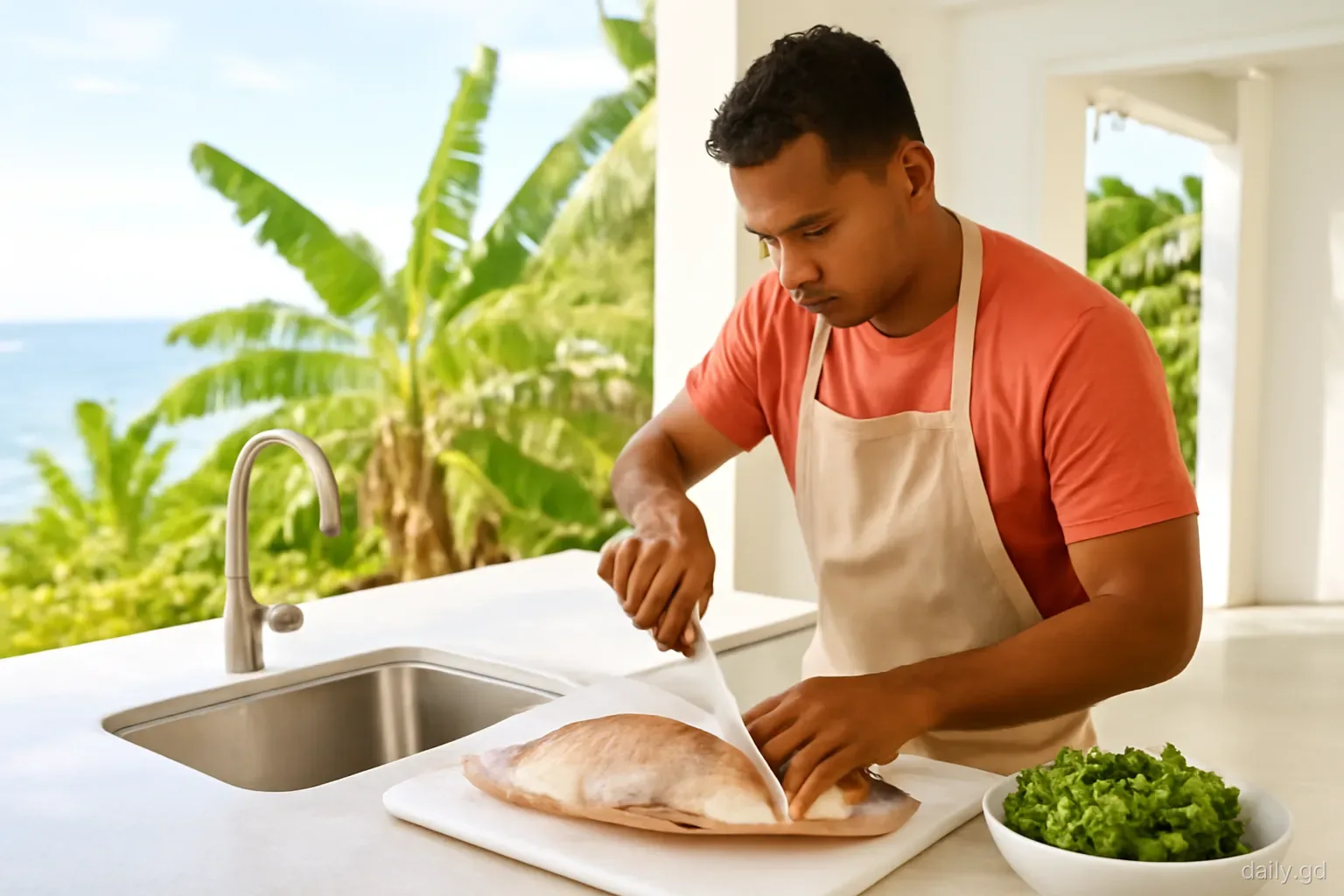
The most common use is as a marinade. Chicken pieces are washed with lime or vinegar and water, a long-standing Caribbean habit, then rubbed with green seasoning, salt, black pepper and often a little garlic powder or curry powder, and left for a few hours or overnight in the fridge before stewing, baking or barbecuing. Fish is treated similarly, usually with a shorter marinating time and a squeeze of lime.
In stews and soups, a spoonful or two goes into the pot early, after onions are softened in oil, to build flavour before the meat or peas go in. Rice and peas, split pea soup, lentils, stewed red beans and oil down all benefit. It is also stirred into minced meat, fish cakes and saltfish dishes, and some cooks add a little to scrambled eggs or a pot of macaroni pie.
The amount is a matter of taste. As a rough guide, two to three tablespoons season a kilo of chicken generously; less is needed for delicate fish. Because the blend already contains garlic and onion, adjust salt and other seasonings once you know how strong your batch is.
Storage and keeping it fresh
Kept in a clean, tightly closed glass jar in the fridge, green seasoning with vinegar usually lasts one to two weeks before it starts to darken and lose its fresh smell. Always use a clean, dry spoon; a spoon that has touched raw meat will spoil the whole jar. A thin layer of oil on top helps keep air out.
For longer storage, freeze it. Ice-cube trays are ideal: fill each section, freeze, then tip the cubes into a sealed bag. One or two cubes go straight into a pot or a marinade. This is also a useful habit for hurricane season and power cuts, since frozen cubes can be used gradually as the freezer thaws.
Make a fresh batch when herbs are plentiful and cheap at the market. During the dry season, when herbs can be scarcer, a frozen supply avoids paying more for small bundles.
Growing your own seasoning herbs
Many Grenadian households keep the main green seasoning herbs growing near the kitchen door, and they are among the easiest plants to grow in the island's climate. Chive can be started from the root ends of a market bundle planted in a pot of good soil. Thyme and broad-leaf thyme root readily from cuttings. Culantro grows best in a damp, partly shaded spot, and seasoning peppers will bear for a long time on a single bush if watered in the dry season.
A few pots on a sunny step or a small raised bed is enough for a household. The saving per week is small, but the convenience is large: no running out of thyme halfway through a Sunday stew, and herbs picked minutes before use. Watch for snails and caterpillars in the rainy season, and keep pots off the ground if ants or slugs are a problem. Neighbours with established plants are often happy to share cuttings, which is how many kitchen gardens start.
Common mistakes
Using hot peppers by accident. Seasoning peppers and hot peppers can look similar at a stall. One hot pepper in a blender full of herbs will make the whole batch fiery. Taste a tiny piece of each pepper if unsure, or ask the vendor.
Blending woody thyme stems. They leave hard fragments and a bitter edge. Strip the leaves.
Too much water. Watery seasoning spoils faster and dilutes flavour. Use vinegar or lime and add liquid sparingly.
Storing in plastic. The smell of garlic and culantro lingers in plastic containers. Glass jars are better.
Skipping the wash. Herbs from markets and gardens need careful washing to remove soil and small insects before blending.
Making too much at once. A huge batch that sits in the fridge for a month turns dark and dull. Make what you will use in a fortnight and freeze any extra straight away.
Frequently asked questions
What is in Grenadian green seasoning?
A typical blend contains chive (spring onion), fresh thyme, culantro (shado beni), local celery, seasoning peppers, garlic and often onion and parsley, blended with a little vinegar or lime juice. Recipes vary by family, and some add broad-leaf thyme, basil or a small amount of hot pepper.
What is culantro, and can coriander replace it?
Culantro, called shado beni or chadon beni in the region, is a herb with long serrated leaves and a stronger, earthier flavour than coriander. Coriander can stand in at a pinch, using more of it, but the taste will be lighter. Culantro is easy to buy at Grenadian markets.
How long does green seasoning last in the fridge?
With vinegar or lime juice and stored in a clean, closed glass jar, it usually keeps one to two weeks. Use a clean spoon each time and keep a thin layer of oil on top. Freeze it in ice-cube trays for storage of several months.
Are seasoning peppers hot?
No. Seasoning peppers look a little like hot peppers but have very little heat. They add fruity aroma rather than spice. Because the two can be confused at a stall, ask the vendor or taste a tiny piece before adding a handful to the blender.
Is green seasoning the same in Grenada as in Trinidad?
The idea is shared across the southern Caribbean, and the core herbs overlap. Proportions, the use of seasoning peppers, celery and onion, and whether vinegar or oil is used vary by island and by family. There is no single official recipe anywhere.