In Grenada, the market tells you what month it is. When the stalls are heaped with mangoes and every yard seems to have a tree dropping fruit onto the roof, it is the middle of the year. When pigeon peas and sorrel appear in bundles and bags, Christmas is coming. Home cooks who follow these rhythms eat better and spend less, because produce in its season is at its cheapest and best.
The calendar below is a guide to the main seasons rather than a precise timetable. Timing shifts from year to year with rainfall, drought and storms, differs between the wetter interior and the drier south, and varies with variety: some mango types ripen weeks before others. Ask your vendor what is coming in and going out; they always know, and they will often tell you which fruit is worth buying today and which will be better next week.
The year-round basics
Some staples are available in almost every month, though price and quality still move with the weather. Bananas, both ripe and green fig, and plantains are on sale year-round. Ground provisions such as dasheen, eddoes, yam, sweet potato and cassava are steady, with particular varieties becoming plentiful at different times. Pumpkin, christophene, cabbage, cucumber, callaloo (dasheen leaf), okra and bodi are usually around, with dips during very dry spells or after flooding rain.
Breadfruit bears for much of the year, with heavier crops in certain months and lighter periods in between. Coconuts, both green water coconuts and dry ones for grating, are always available. Limes are a constant in Grenadian kitchens, though their price can jump during short gaps in supply. Spices such as nutmeg, cinnamon, bay leaf and cloves are available all year. These form the steady core of the household menu, and seasonal items are layered on top.
The dry season, roughly January to May
The first months of the year are generally dry, sunny and breezy. Citrus is at its best in the early part of the year: grapefruit, oranges, portugals (the local name for a mandarin-type fruit) and tangerines appear in quantity. Golden apples are often around from late in the year into the early months, eaten green with salt and pepper or made into juice. Sapodilla and soursop also turn up through this period, depending on the trees.
Cocoa harvest and the dry season overlap, so it is a good time to buy fresh cocoa balls or sticks for cocoa tea. Vegetables can be more variable as the dry months go on; tomatoes, lettuce and other water-hungry crops may become scarcer and dearer in a long drought, while provisions in the ground keep well. By April and May, the first early mangoes start to appear, a sign that the big fruit season is on its way.
Mid-year: mango, plum and zaboca
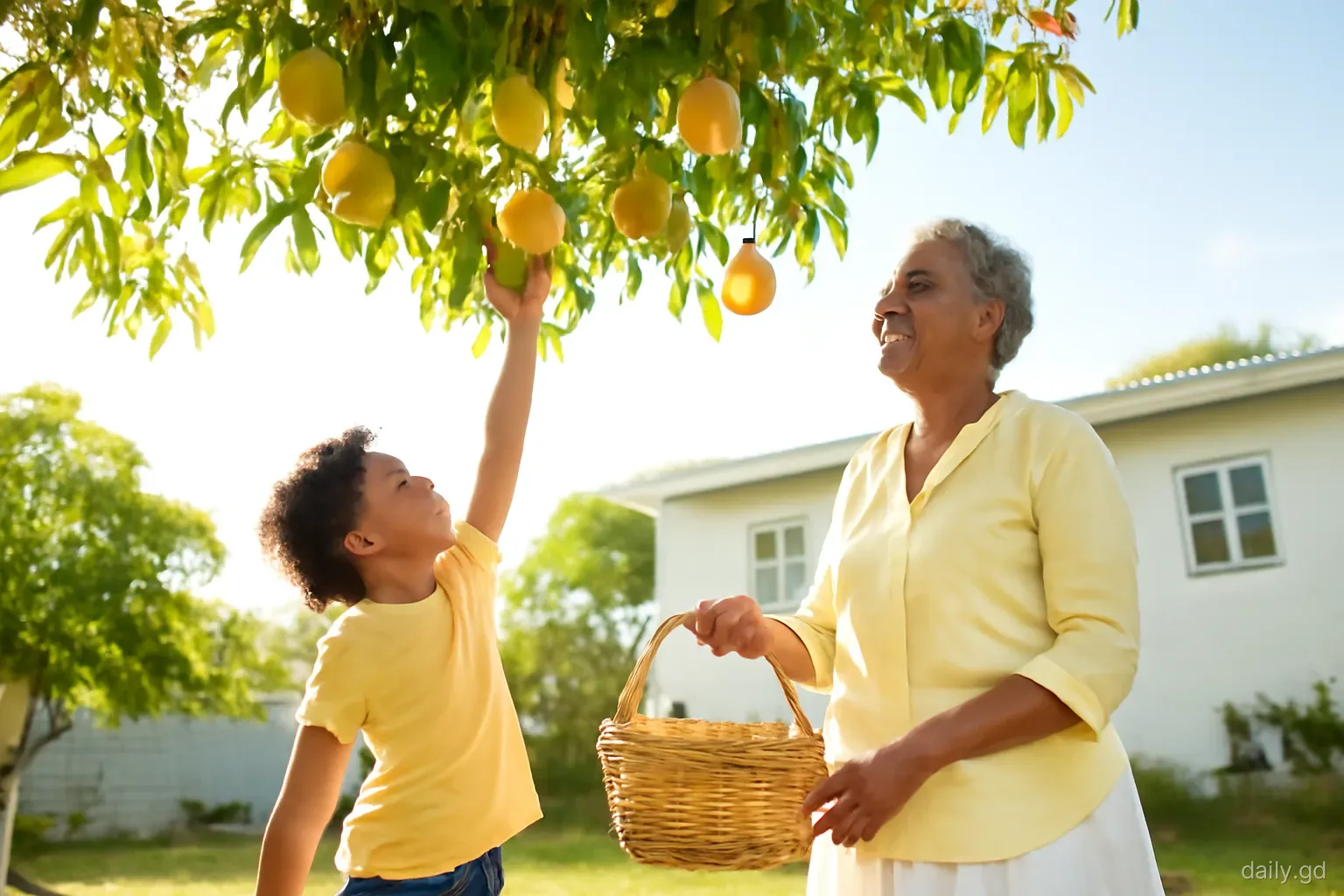
Mangoes. Grenada has many mango varieties, and the main season runs through the middle of the year, often peaking around June and July. Julie mangoes are the best-known eating mango; other varieties come with local names that change from village to village. Green mangoes are used for chow, a sharp snack of sliced green fruit with salt, lime, garlic and pepper, and for chutney and amchar.
Plums and small fruits. Local plums and other small tree fruits appear in the middle of the year, sold in small bags at the roadside. Chenet, the green-skinned fruit known elsewhere as guinep or skinup, is a favourite later in the summer.
Avocado, called zaboca. The avocado season generally starts in the middle of the year and runs for several months. Grenadian zaboca are often large, and a slice with bread, provisions or saltfish is a classic pairing. Prices fall sharply when trees are bearing heavily.
Corn. With the rains, fresh corn becomes more common, roasted at the roadside and used in corn soup.
Breadfruit peaks. Breadfruit is often especially plentiful around the middle of the year, which is one reason oil down is a popular cook-up in this period.
What the rains do to the vegetable stall
The rainy season, which generally runs from about June to December, changes the vegetable side of the market as much as the fruit side. Leafy crops such as callaloo, lettuce, pak choi and herbs grow fast once the rain arrives, and prices often ease. At the same time, very heavy downpours split tomatoes, rot cucumbers and encourage pests and fungal disease, so a run of wet weeks can suddenly make salad vegetables scarce and dear. Roads in farming areas of St Andrew and St David are sometimes affected by landslips, which delays produce reaching town.
Experienced cooks respond by switching rather than paying more. When tomatoes are poor, a stew is thickened with pumpkin or coloured with saffron instead; when lettuce wilts in the heat, shredded cabbage and carrot take its place. Provisions and pumpkin store well and carry households through the rough patches. It is also the season for keeping a closer eye on what is bought, since produce spoils faster in humid weather and should be eaten within a few days.
Late in the year: peas, sorrel and the Christmas table
As the rainy season continues into the last months of the year, attention shifts to the Christmas crops. Pigeon peas come in towards the end of the year and are a Christmas essential for rice and peas and pigeon pea soup. Buying them in the pod and shelling them is a family job in many homes; shelled peas cost more but save time.
Sorrel, the red sepals of a hibiscus plant, appears in markets towards Christmas and is brewed with cinnamon, cloves, bay leaf and sometimes ginger into the deep red drink that defines the Grenadian holiday season. Ginger for ginger beer is also in demand. Golden apples and citrus start again, and many cooks buy dried fruit and essences for black cake well in advance. Expect prices for these Christmas items to rise in the last two weeks of December as demand peaks.
How to cook with the seasons
Shopping by season is a habit more than a rule. These steps help it stick:
- Ask your regular vendor each week what is new, what is ending and what is plentiful. The plentiful item is usually the cheapest.
- Build the week's menu around one or two seasonal items rather than a fixed list of recipes.
- When a fruit is in glut, preserve it: freeze mango pulp for juice, make chutney or tamarind balls, or dry slices in the sun.
- Freeze shelled pigeon peas and corn kernels in portions to use after their season ends.
- Accept gaps. If tomatoes are scarce and expensive after heavy rain, cook with pumpkin or christophene instead until supply returns.
- Share surplus from your own trees with neighbours; it tends to come back in another form later in the year.
Pitfalls and things to check
Assuming fixed dates. Seasons move with rainfall, drought and storms. A hurricane or strong storm can strip fruit trees and set crops back for a year, as happened in parts of the islands after major storms.
Buying imported fruit out of habit. Apples, grapes and berries are imported and expensive. In most months there is a local fruit that fills the same role for far less.
Eating unripe or unfamiliar fruit. Some local fruits must be properly ripe before eating, and a few plants are toxic. If unsure about something growing in a yard, ask a neighbour before tasting.
Ignoring the dry-season pinch. Vegetables needing lots of water get dearer as the dry season drags on. Plan more provisions, peas and pumpkin in March and April.
Forgetting to wash fruit from trees. Fruit picked from the ground or a yard should be washed well, especially in areas with livestock or rats.
Frequently asked questions
When is mango season in Grenada?
The main mango season runs through the middle of the year, often peaking around June and July, though early varieties can appear in April and May and late ones linger into August or September. Timing varies with rainfall and variety, so ask vendors what is ripening each week.
What is zaboca?
Zaboca is the common Grenadian name for avocado. Grenadian avocados are often large and creamy, and they are eaten with bread, provisions, saltfish or simply with salt and pepper. The season generally starts mid-year and lasts several months, when prices drop considerably.
When does sorrel appear in Grenada?
Sorrel comes into the markets towards the end of the year and is closely tied to Christmas, when it is brewed into a spiced red drink. It is usually easiest to find from late November through December, with prices rising just before Christmas.
What fruit is in season in Grenada in the dry season?
The early months of the year are good for citrus such as grapefruit, oranges and portugals, plus golden apples, sapodilla and soursop in many years. Bananas, papaya, coconuts and pineapples are available most of the year. Early mangoes start appearing towards April and May.
Is breadfruit available all year in Grenada?
Breadfruit bears for much of the year, with heavier crops in some months and quieter spells in others. It is often especially plentiful mid-year. When supply is good it is one of the cheapest filling foods available, roasted, boiled, fried or cooked into oil down.