Families who move to Grenada with school-age children often find that within a term, the children are speaking differently. A seven-year-old comes home saying "allyuh" and "doh", a teenager's accent has softened into a Caribbean lilt with friends, and the parents start to wonder whether this is a problem for schoolwork or simply part of growing up somewhere new.
For the vast majority of children it is the second. Grenadian children grow up moving between Creole at home and in the playground and Standard English in the classroom, and newcomer children quickly join them. This guide explains what schools expect, what children will hear and say, which words cause the most raised eyebrows at the dinner table, and how parents can support both languages without turning home into a grammar lesson.
Two languages in every school day
Instruction in Grenadian schools is in Standard English, and pupils are expected to read, write and answer formal questions in it. At break time, on the bus and walking home, the language switches to Creole, sometimes deep Creole that adults from abroad struggle to follow. Most Grenadian children manage this switch effortlessly by the middle of primary school, and teachers themselves move between the two, using Creole for a joke or a reprimand and Standard English for the lesson.
Attitudes have changed over generations. Many older Grenadians remember being told off, or worse, for speaking Creole in class, and some parents still discourage it at home in the belief that it harms school results. Linguists and many educators now take the view that children do better when their home language is respected and Standard English is taught as an addition rather than a replacement. In practice, schools vary, and individual teachers vary even more.
For newcomer children, the classroom side is usually easy, since they arrive already speaking Standard English. The playground is where the new language is learned, fast, and that learning is what helps them make friends.
What the exams and the system expect
Primary exit assessment. At the end of primary school, children in Grenada sit the Caribbean Primary Exit Assessment, developed by the Caribbean Examinations Council with regional ministries. It replaced the old Common Entrance examination and plays a part in secondary school placement.
CSEC English. At the end of secondary school, students take Caribbean Secondary Education Certificate exams, and English is a core subject. The written papers are assessed in Standard English, so writing skills matter.
Creole in the curriculum. Caribbean literature studied at school often includes poems, stories and dialogue in Creole, and students are expected to understand and discuss it. Knowing the home language is an advantage here.
Oral work. Presentations and oral exams expect a clear, standard register, though a Grenadian accent is entirely normal and not penalised.
Private and international schools. Schools following other curricula have their own expectations, but the same playground dynamic applies to their pupils.
Playground words parents will hear first
Fass. Nosy or forward, poking into other people's business. "Doh be fass" means mind your own business.
Tief. To steal, or a thief. "He tief me pencil" is a classic playground complaint.
Licks. A beating or a heavy defeat. "He get licks" can mean a child was punished, or that a team lost badly.
Mamaguy. To tease, flatter insincerely or fool someone. "Stop mamaguying me" means stop trying to fool me.
Wutless. Worthless, often used of a person who behaves badly or will not work.
Bad-minded. Envious or spiteful, wishing others ill. A strong criticism of someone's character.
Hard ears. Disobedient, not listening. "That child too hard ears" is a frequent adult complaint.
Picong. Teasing banter, trading playful insults. Children and adults alike enjoy it, and being able to take and return picong is part of fitting in.
Commess. Confusion, drama or a mess of gossip. A playground fight that drags in half the class is commess.
Supporting both languages at home
The most useful thing parents can do is treat Creole as a skill their child has gained rather than a bad habit to correct. Children who are mocked or punished for speaking Creole at home often stop telling their parents what happens at school, which is a far bigger loss than an occasional "he eh come" at the dinner table.
At the same time, reading together, writing letters or stories and talking about books keep Standard English strong, especially in written form. Many families find a natural division: Creole for play and friends, Standard English for homework, formal writing and conversations with relatives abroad. Talking openly about the two as different tools, suited to different settings, helps children understand why both matter.
Local stories are a good bridge. Anansi stories and Grenadian folklore such as the ligaroo, the lajables and Mama Glo are told with Creole dialogue and give children a way to share what they hear at school. Local authors and Caribbean anthologies can often be found at bookshops in St George's and at the public library.
Common worries, answered plainly
Will Creole harm their spelling and grammar? For a child who reads regularly and is taught Standard English at school, there is little evidence it does. The bigger risk to written English is a lack of reading, not the playground.
Will they lose their original accent? Many children develop a Grenadian accent with friends and keep their original one with family. Some settle in between. Accents are flexible at that age and change again if the family moves.
Should parents learn Creole too? Understanding it helps you follow your child's world and school events. Speaking it is optional.
What about teenagers? Teenagers often adopt the local accent more consciously, as part of fitting in. It is a social choice and usually a sign they are settling well.
Mistakes parents make
Correcting in front of friends. Picking up a child's Creole in front of classmates embarrasses them and signals disrespect for the friends' home language.
Mocking the accent. Even as a family joke, it teaches children that the local way of speaking is inferior.
Assuming falling marks come from Creole. If school results dip, look first at the new curriculum, teaching style and settling-in stress, and talk to the teacher.
Ignoring rude words. Some Creole words are genuinely offensive, and children may not realise. Ask what a word means before banning it, and explain why some words are not used in front of adults.
Shielding children from local friends. Children who mix freely learn the language, the humour and the social rules much faster, and settle better.
Grenadian children's games, songs and stories
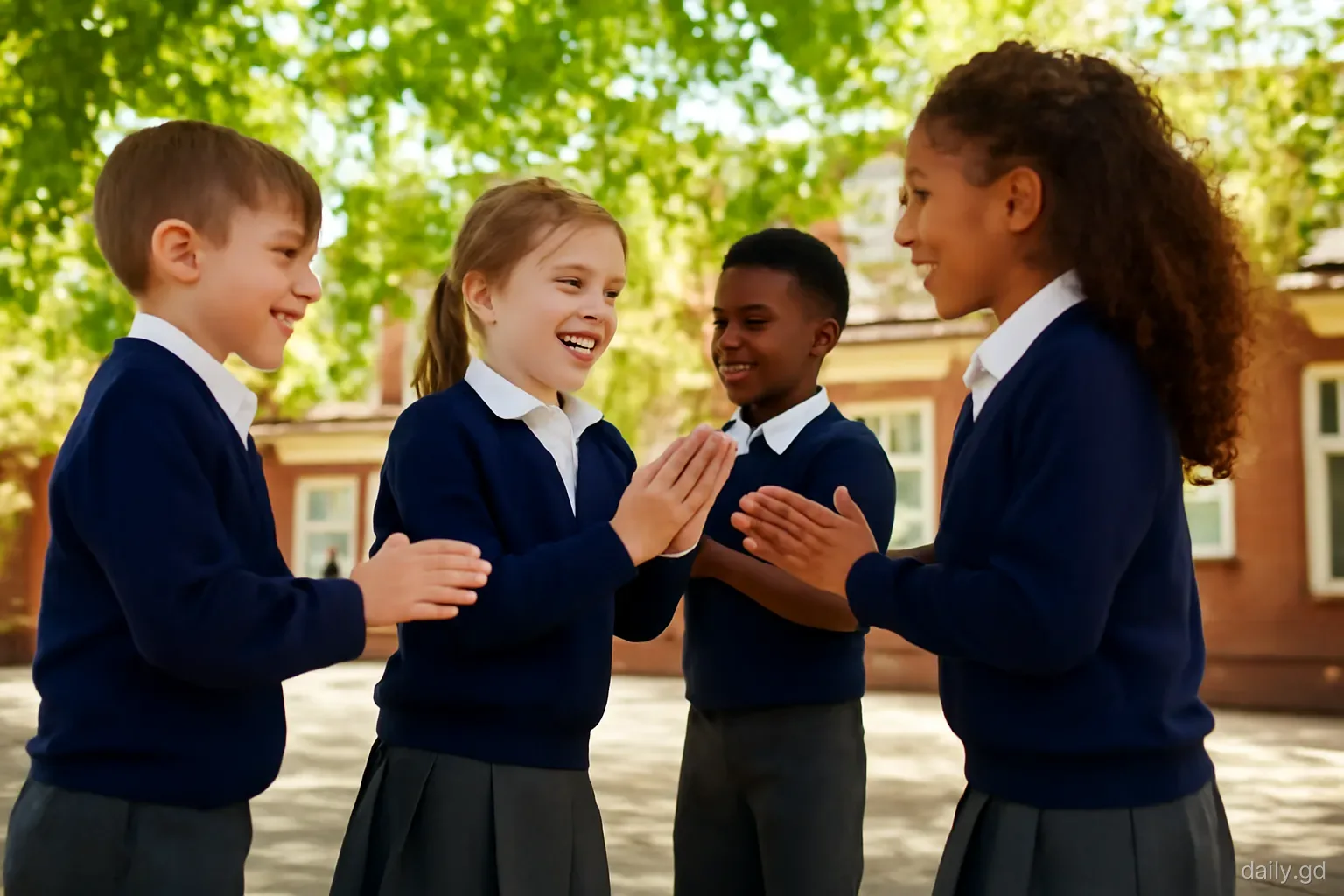
Language learning for children happens through play, and Grenadian play has its own repertoire. Clapping games and skipping rhymes, ring games at school functions, cricket with a tennis ball and an improvised wicket, marbles in some villages, and kite flying around Easter all come with their own words, chants and arguments. A newcomer child who joins in learns the language of the game first and the rest follows.
Music matters too. Children hear calypso and soca at home, on the radio and at school events, and pick up both the tunes and the expressions in the lyrics. During the Spicemas season, children's carnival events and school calypso competitions give them a stage, and many schools encourage pupils to write and perform their own songs.
Stories passed on by grandparents remain a strong link to older language. The jumbie stories, ligaroo tales and Anansi trickster stories carry Creole dialogue and some French Creole words that have otherwise faded from everyday use. Encouraging children to ask older neighbours or a school friend's grandparents for a story is one of the best ways for a newcomer family to connect with this side of Grenadian life.
Frequently asked questions
Do schools in Grenada teach in English?
Yes. Lessons, textbooks and exams in Grenadian schools use Standard English. Creole is the everyday language of most pupils outside lessons, and Caribbean literature studied in class often includes Creole dialogue, so children work with both throughout their schooling.
Will my child pick up a Grenadian accent?
Very likely, at least with friends. Younger children often switch accents naturally depending on who they are speaking to. Many keep their original accent at home, and accents remain flexible through childhood.
What exams do children take in Grenada?
At the end of primary school, children sit the Caribbean Primary Exit Assessment. Secondary students take Caribbean Secondary Education Certificate exams around age sixteen, with English as a core subject, and some continue to CAPE. Confirm details with the school or the Ministry of Education.
What does 'fass' mean?
Fass means nosy or forward, interfering in other people's business. 'Doh be fass' tells someone to mind their own business. It is common among children and adults and can be used playfully or sharply.
Is it bad for children to speak Creole?
No. Creole is the home language of most Grenadian children and does not prevent success at school. Children who read regularly and learn Standard English in class become skilled at switching between the two, which is an asset.