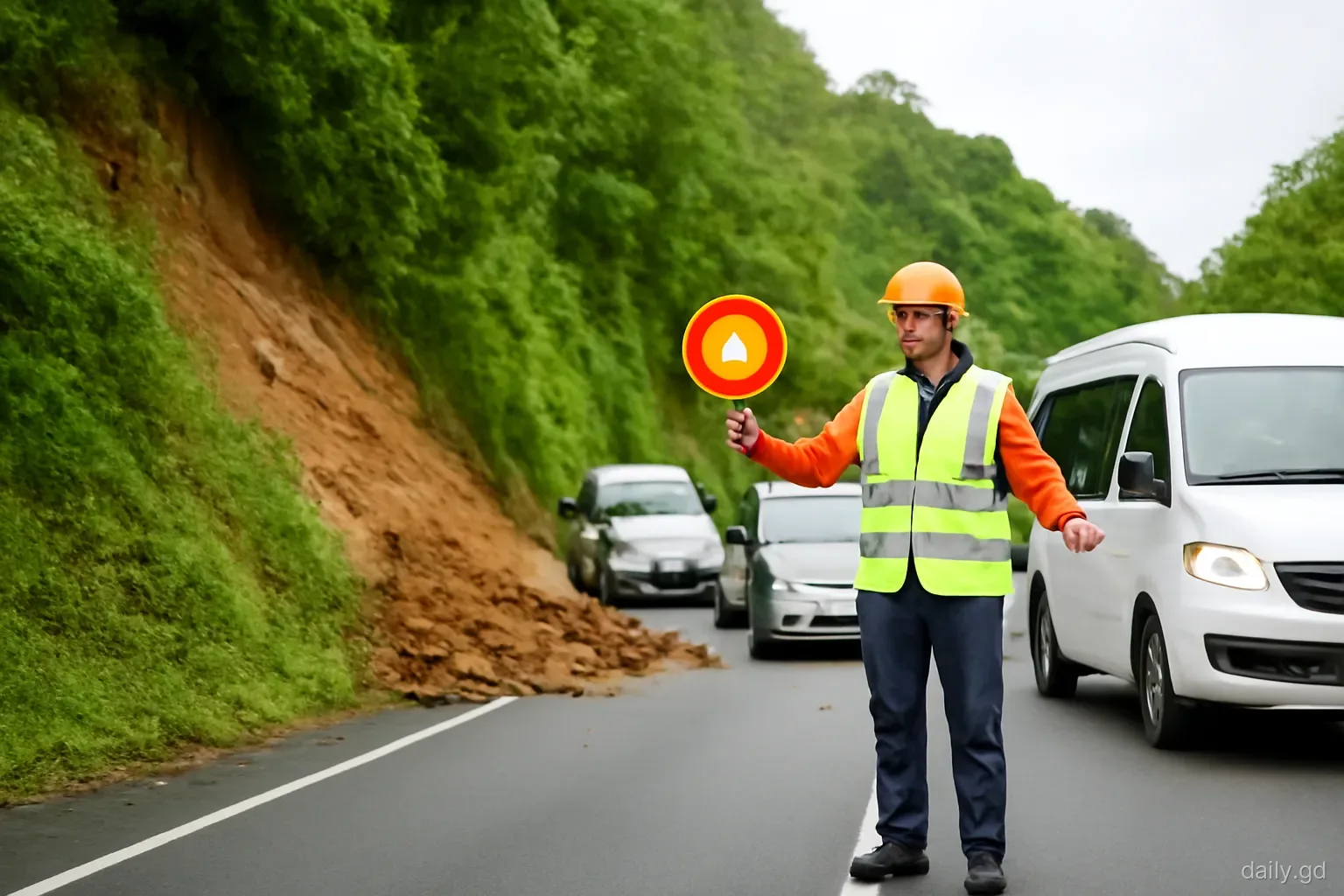
Most days the commute in Grenada is predictable: you know when the buses fill, where the traffic slows and how long it takes. Then a night of heavy rain brings mud down onto the Grand Etang road, a resurfacing crew closes one lane on the west coast, or the build-up to Spicemas sends traffic around St George's on detours. On an island with few alternative roads, one blockage can stretch a twenty-minute run into an hour.
Regular commuters develop a sense for these disruptions and a set of habits for coping. This guide runs through the main causes, when they are most likely, how to find out about them and what to do when your usual route is out.
Rain, flooding and landslides
The rainy season, roughly June to November, is when disruption is most common. Intense downpours overload drains, send water across low-lying roads near rivers and the coast, and trigger small landslides on the steep cuts that line many mountain and hillside roads. The Grand Etang road over the central mountains is particularly exposed, and fallen trees and mud can close it for hours. Coastal roads on the west side are also vulnerable where hillsides come down to the road edge.
Even without blockages, rain slows everything. Buses fill faster because fewer people walk, drivers rightly slow down on slick bends, and visibility drops in heavy showers. A wet morning can add fifteen or twenty minutes to an ordinary commute.
During tropical storm and hurricane alerts, schools and many offices close and buses stop as conditions deteriorate. Official guidance from the National Disaster Management Agency and the Meteorological Service is the reference; once an alert is issued, the question is not how to get to work but whether you should travel at all.
Roadworks and road projects
Lane closures. Resurfacing, drainage work and road rebuilding projects often reduce a road to a single lane controlled by flag workers or temporary signals. Where the road is the only route, such as long stretches of the west coast, queues can build quickly at peak times.
Longer projects. Major road rehabilitation and bridge works can last months. Once they start, commuters adjust their departure times and buses sometimes take alternative routes through nearby villages.
Utility digs. Water, electricity and telecoms work can dig up a section of road with little notice. Usually short, but it can catch you on a narrow street.
How to adapt. Leave earlier for the duration, ask drivers whether they are diverting, and expect the worst queues in the first and last hours of the working day.
Patience at the flag. Flag workers control the flow on single-lane sections and are doing a hot, difficult job. Following their signals, keeping your distance from machinery and not squeezing through on a changing signal keeps everyone safe and moving.
Carnival season and big events
Spicemas, Grenada's carnival, reaches its peak in August, ending with Carnival Monday and Tuesday. In the weeks before, shows, fetes and competitions take place in the evenings, and the main days bring road closures in and around St George's for J'Ouvert in the early hours of Monday, the night-time mas on Monday and the parade of the bands on Tuesday. Buses are diverted, some drivers take time off, and those who work are often packed.
Most offices close for Carnival Monday and Tuesday, but hospitals, hotels, security and many shops keep running. If you work on those days, plan your route around the closures and allow far more time than usual. Walking part of the way is often quicker than sitting in a bus that cannot reach the terminal.
Other events also affect traffic: Independence Day celebrations on 7 February, major sporting events at the National Stadium, large church gatherings and political rallies. The effect is usually concentrated in a few hours, so a little advance notice is enough to avoid most of it.
For residents who do not work over Carnival, the simplest approach is the one many Grenadians take: get errands, bank visits and shopping done the week before, stock up on what the household needs, and treat the main days as days to stay put or travel only on foot. Trying to drive through town on Carnival Tuesday afternoon is a lesson most people learn once.
Cruise ship days, funerals and everyday surprises
Some disruptions are smaller but routine. Knowing them helps explain the days when town feels inexplicably slow.
- Cruise ship days: during the cruise season, broadly from late in the year to spring, several thousand passengers can arrive in St George's on a single day. Tour vans and taxis fill the streets around the port and the Carenage, and the town centre is busier through the morning.
- Funerals: processions move slowly through villages and towns, and roads near churches and cemeteries fill with parked cars. It is respectful to wait rather than push past.
- School events: graduations, sports days and prize-givings bring extra traffic near schools.
- Accidents and breakdowns: on single-lane roads a broken-down truck can halt traffic until it is moved.
- End-of-month Fridays: payday shopping fills town with traffic in the afternoon.
Finding out what is happening
Local radio. Morning radio programmes carry traffic, weather and official notices, and many commuters listen on the bus or in the car. Callers often report problems before any official notice.
Official channels. The Government Information Service, the Royal Grenada Police Force and the National Disaster Management Agency publish notices about planned closures, diversions and severe weather.
Community and work groups. Neighbourhood and workplace messaging groups are often the fastest source of what is happening on a specific road, though rumours spread there too. Check against official notices.
Drivers and conductors. They hear about problems on their route from other drivers before anyone else. A quick question at the stop can save a long wait.
Your own eyes in the morning. A look at the sky and the overnight rainfall tells experienced commuters much of what they need. After a night of torrential rain, assume the hill roads are slow and leave early without waiting for confirmation.
A commuter's year at a glance
Disruption follows a rough calendar. The months below are approximate and vary from year to year, but they help with planning leave, important appointments and the first weeks in a new job.
- January to May: the dry season, generally the easiest commuting months, though cruise ship days keep St George's busy and roadworks are often scheduled for the drier weather.
- February: Independence Day on 7 February brings parades and official events in the capital.
- June to November: the rainy season and Atlantic hurricane season, with heavy showers, flooding, landslides and occasional storm alerts that close schools and offices.
- July and August: Spicemas build-up, with evening shows and fetes, then the main carnival days in August and their road closures.
- September and October: new school year traffic returns, often at the wettest point of the season.
- December: Christmas shopping crowds in town, end-of-year events, and the return of the cruise season.
Building slack into your routine
Keep a plan B route. If you commute from Grenville, know when you would take the south-east coast instead of Grand Etang. From the north, know where you could stay in town if the road closed.
Agree flexibility at work. Many employers understand weather and road disruption, especially in the rainy season. Agree in advance what to do if you cannot get in, and whether some work can be done from home.
Pack for delay. Water, a snack, a charged phone, an umbrella and a light layer for air-conditioned offices make a long delay far less miserable.
Leave earlier in risk periods. During long roadworks, the weeks before Carnival and the height of the rainy season, an extra fifteen to thirty minutes in the morning removes most of the stress.
Frequently asked questions
When are Grenada's roads most likely to be disrupted?
During the rainy season from June to November, when heavy rain causes flooding and landslides, and in August around Spicemas, when roads in and around St George's close for carnival events. Major roadworks can cause disruption at any time of year.
Does the Grand Etang road close in bad weather?
It can. The mountain road is exposed to landslides, fallen trees and flooding during heavy rain and storms, and may be closed for hours or longer. Commuters between Grenville and St George's often use the longer south-east coast route instead.
Do buses run during Carnival?
Some buses run, but routes are diverted around closures in St George's, and many drivers take time off on Carnival Monday and Tuesday. Expect crowded buses, long waits and the need to walk part of the way if you must travel.
How can commuters find out about road closures?
Listen to local radio, follow notices from the Government Information Service, the police and the National Disaster Management Agency, and ask route bus drivers, who often know first. Workplace and neighbourhood groups are useful but should be checked against official sources.
Should you travel to work during a storm alert?
Follow official advice. Once a tropical storm or hurricane alert is issued, schools and many offices close and buses stop as conditions worsen. Being caught on a hillside road in a storm is far more dangerous than missing a day of work.