Driving in Grenada is on the left, and the highway code is broadly British in spirit. What the code does not cover is the large set of habits that make the morning commute work: the short toot on a blind bend, the flash of headlights that means go ahead, the bus that stops dead in front of you because someone waved from a doorway. Regular commuters read these signals without thinking. Newcomers spend their first weeks slightly tense.
This guide is for residents who drive to work or school every day. It covers the signals people use, how to share narrow roads with route buses and pedestrians, where friction tends to arise in town, and the documents to keep in the car. It is about daily courtesy and routine rather than the basics of left-hand driving.
Horns, lights and hands: the local signals
A short toot on a bend. On narrow hill roads with blind corners, drivers give a quick tap of the horn before the bend to warn anyone coming the other way. It is a safety signal, not aggression, and you should do the same.
A light double toot. Often simply means thank you, hello to someone the driver knows, or a reminder that a car is coming up behind a pedestrian. Context makes it clear within a few days.
A long lean on the horn. That one is genuine irritation, usually aimed at a driver who has stopped somewhere unhelpful or is dawdling at a green light.
A headlight flash. Most commonly means the other driver is letting you through, for example at a narrow point or a junction. It can also warn of a hazard ahead, so read the situation before you pull out.
A raised hand or wave out of the window. Thanks for giving way. Return it. Small acknowledgements matter on roads where everyone sees the same cars every day.
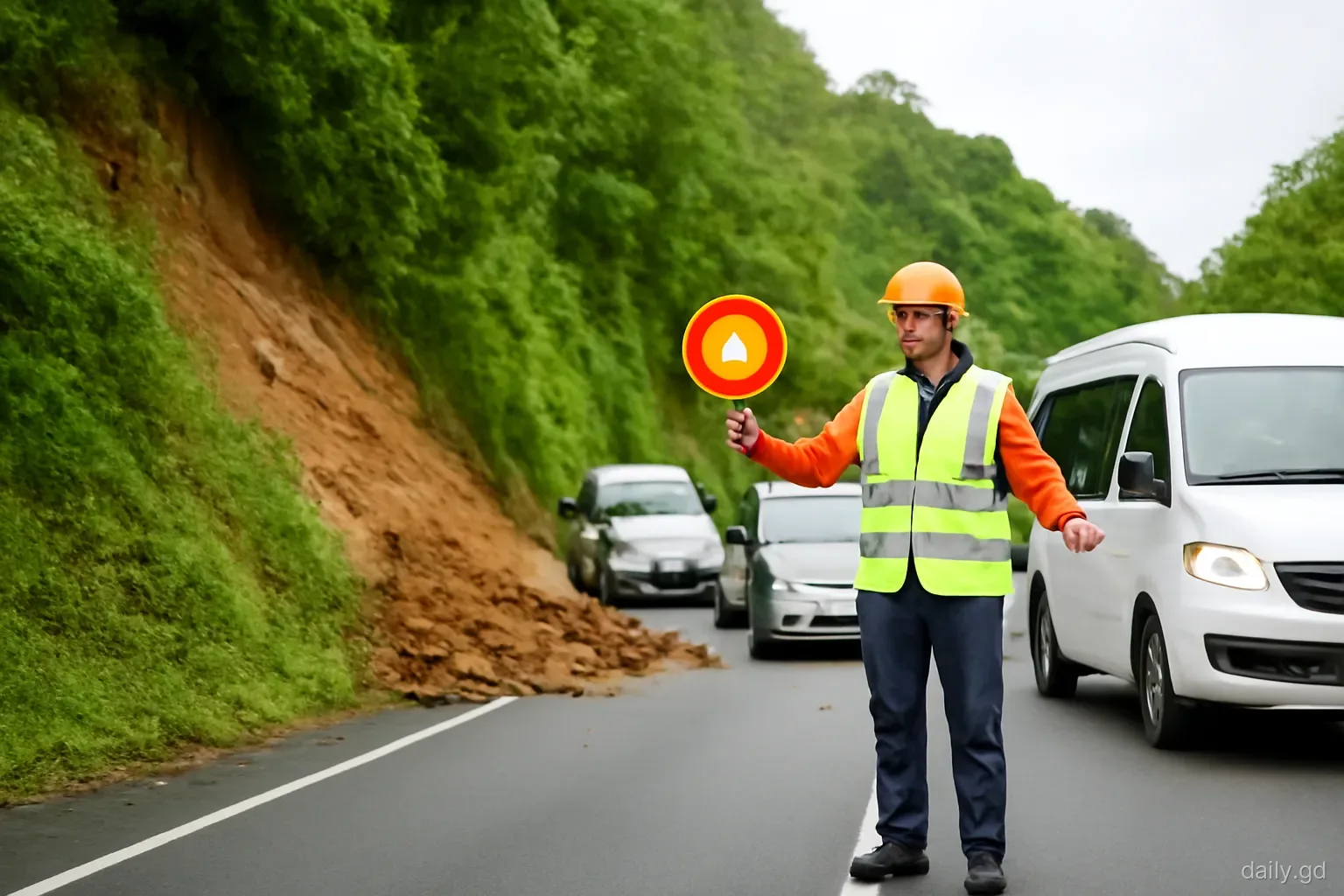
A hand flapping downwards from a window. The driver ahead is slowing or stopping, often because a passenger is getting out or there is something in the road you cannot see.
Sharing the road with route buses
Route buses are the dominant presence on the main roads at rush hour, and their driving style follows their business. A bus earns money by picking up as many passengers as possible, so it will stop wherever someone signals, often with little warning, and then pull out again sharply to stay ahead of the next bus on the same route. Leave more space behind a bus than you would behind a car, and watch the conductor: when he leans out and starts calling, a stop is coming.
Overtaking a stopped bus on a narrow road needs care, because passengers step out and cross in front of it, and oncoming traffic is often hidden by the bus itself. On hills and bends it is usually better to wait. On straight stretches, buses will sometimes wave you past.
Expect buses to overtake you, too. If a bus is pressing close behind on a winding road, the calm response is to let it by at the next safe spot. You will lose seconds, and your commute will be far less stressful than spending ten minutes with a bus filling your mirror.
Narrow hill roads and giving way
Much of Grenada's road network climbs, twists and narrows to little more than one car's width, with a drain on one side and a drop or a wall on the other. On these roads the formal rules matter less than practical sense. The driver who has the easier place to pull in usually does so, and the other acknowledges it. Where neither can pass, the one closest to a wider spot reverses back, and the one going downhill often gives way to the vehicle labouring up, since a heavy car or truck restarting on a steep slope is awkward.
Morning traffic on these roads includes children walking to school, elderly people heading to the shop, dogs, goats and parked vehicles with their hazard lights on. Driving them at the speed of the locals who know every bend is how accidents happen. Drive at the speed of your own visibility.
Courtesy on these roads is reciprocal and remembered. The neighbour you waved through this morning will pull in for you tomorrow, and the driver who forces his way past everyone soon becomes known on the route. In small communities, how you drive is part of your reputation.
Heavy rain changes everything. Water runs down the road surface, drains overflow at the bottom of hills, and loose gravel or mud appears on bends. On wet mornings, leave earlier and drive gently; the people who crash in the rainy season are mostly those trying to keep their dry-weather times.
Parking in St George's and other towns
Finding a space is often the hardest part of a car commute into the capital. A few patterns help most regular drivers.
- Arrive early or accept a walk. Spaces near the Carenage, the market and government offices fill early. Many commuters park on the edge of the centre and walk the last few minutes.
- Use paid lots where available. Some private and public lots charge by the hour or day, and monthly arrangements are sometimes possible. Ask colleagues where they park.
- Read the kerb, not just the signs. Yellow lines, entrances and bus loading areas are enforced, and police tow or ticket in busy areas.
- Never block a gateway or a narrow street. A car left across someone's entrance, even for five minutes, will cause real friction.
- Watch cruise ship days. When ships are in, the town is busier, taxis and tour vehicles take more space, and parking is harder.
- Grenville and Gouyave are easier but not empty. Market days bring their own congestion.
Police checks and what to carry
Routine stops happen. Police set up checkpoints from time to time, often at junctions on main roads, to check licences, insurance and vehicle condition. They are routine and usually quick if your papers are in order.
Keep the documents in the car. Carry your driving licence or local permit, and keep the insurance certificate and vehicle registration in the glovebox. Copies at home help if something is lost.
Seatbelts and phones. Wear a seatbelt and keep the phone out of your hand while driving. Children should be properly restrained.
Be courteous. A polite greeting and patience go a long way. Officers work in the heat at the roadside, and a respectful exchange makes the stop shorter for everyone.
Keep the car roadworthy. Checks sometimes extend to lights, tyres, tinted windows and the general condition of the vehicle. A broken brake light or a bald tyre is cheaper to fix before a stop than after one.
After an accident. In a collision, stay calm, make sure nobody is hurt, and call 911 if anyone is injured. For damage-only accidents, the police usually need to be informed and your insurer will want details, so take photographs and exchange information before moving the vehicles if it is safe.
Common mistakes on the commute
Following too closely. With buses stopping at will and pedestrians stepping out from behind parked cars, tailgating is the cause of many minor collisions.
Forgetting the drains. Open drains run along many roads. Pulling too far left to let someone pass can drop a wheel into one, which is expensive and embarrassing.
Driving tired after a late shift. Winding roads in the dark punish lapses of attention. If you are exhausted, take a taxi or wait.
Not budgeting time for school runs. Traffic near schools between half past seven and eight, and again from mid-afternoon, is slow. Factor it in or avoid those streets.
Ignoring headlights at dusk. Light fades quickly in the tropics. Switch on early so others see you.
Frequently asked questions
Is it rude to use the horn in Grenada?
No, short toots are part of normal driving. Drivers use them to warn on blind bends, say thanks or greet people they know. A long, sustained horn is different and signals annoyance, so keep it for genuine hazards rather than impatience.
What does it mean when a driver flashes their headlights?
Most often it means the other driver is giving way and you can go ahead. It can also warn of a hazard, such as a police checkpoint, an accident or animals on the road, so check the situation before moving.
Who gives way on a narrow hill road?
In practice, the driver with the easier spot to pull in does so, and the vehicle going downhill often yields to one climbing. If neither can pass, the car nearest a wider stretch reverses. Acknowledge anyone who gives way with a wave.
Where can commuters park in St George's?
Street parking near the centre is limited and fills early. Many drivers use paid lots on the edges of town or park further out and walk. Colleagues are the best source of current options, including any monthly parking arrangements.
What documents should drivers carry in Grenada?
Carry your driving licence or temporary local permit, and keep proof of insurance and the vehicle registration in the car. Police checkpoints do occur, and having everything to hand keeps the stop short.