Rubbish in Grenada is collected from the roadside by trucks working to a schedule for each area, and for most households that is all there is to it: put the bags out at the right time and they disappear. Newcomers usually run into trouble with the details, such as dogs tearing open bags left out overnight, a broken fridge that nobody will take, or the realisation that the recycling bin they are used to does not exist here.
This guide explains how household waste collection works day to day, how to store and present rubbish so it is actually collected, what to do with bulky items and garden waste, what recycling and composting options exist, and the habits that keep a yard clean and neighbours happy.
Who collects, and how the schedule works
Household waste collection is the responsibility of the Grenada Solid Waste Management Authority, usually called the GSWMA. It organises collection routes across the island, generally using contractors with compactor trucks, and runs the main disposal site at Perseverance, north of St George's. Carriacou has its own arrangements.
Each area has collection on particular days of the week, and busier areas usually get more than one collection. Trucks often start early in the morning, so most households put their rubbish out either late the evening before or first thing in the morning. The simplest way to learn your area's days is to ask neighbours or the landlord, or to contact the GSWMA directly; schedules are occasionally adjusted.
Public holidays, Carnival and severe weather can shift collections. After a major storm, the authority usually organises extra collections for debris, but these follow their own schedule and priorities, and patience is needed.
Storing and putting out rubbish so it gets collected
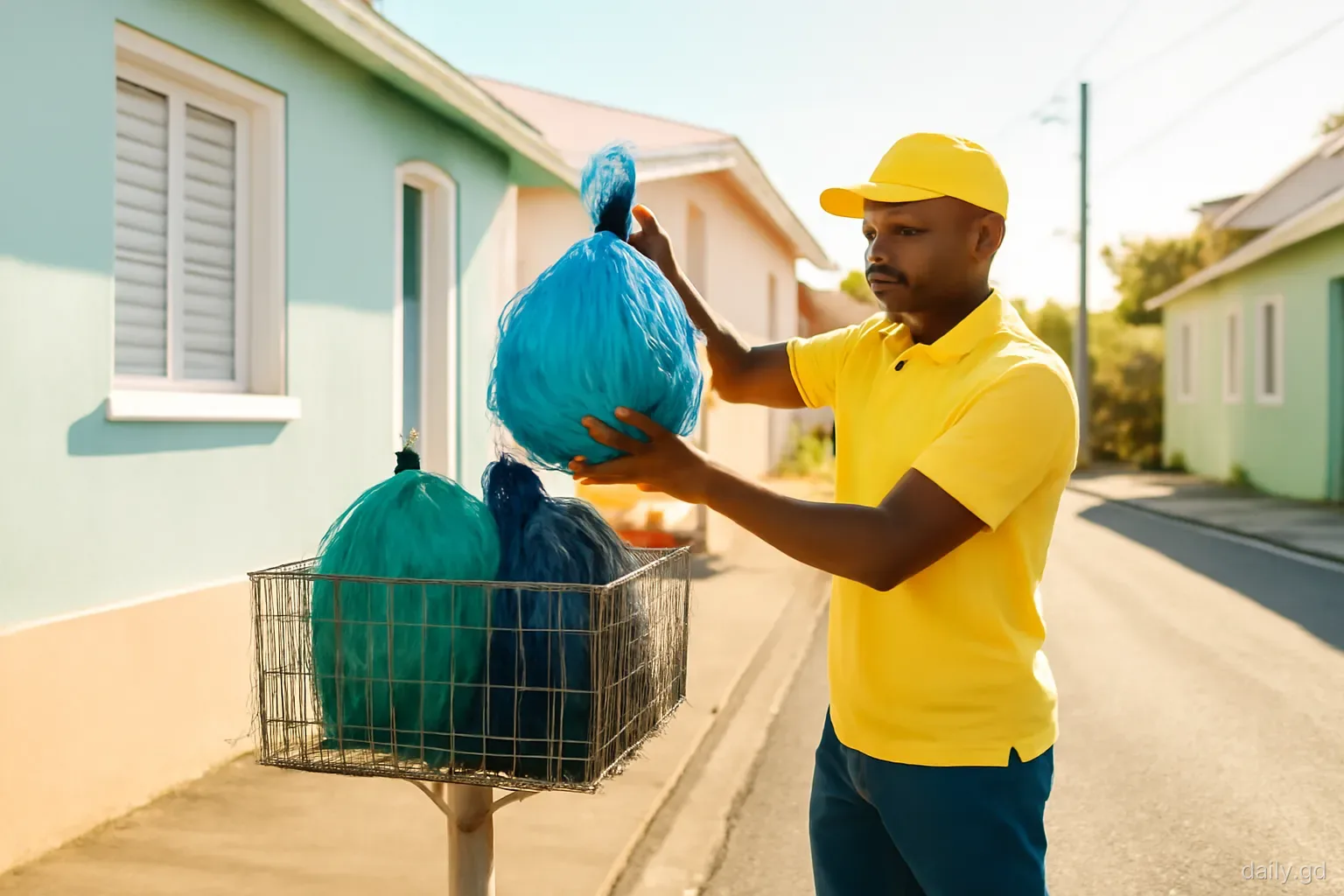
Use the raised bin. Across Grenada you will see metal baskets or platforms on posts outside homes. They keep bags off the ground, away from dogs, cats and rats, and make them easy for the crew to lift. If your home does not have one, a local welder can make one, or a lidded bin will do.
Tie bags firmly. Loose or overfilled bags split when lifted, and the crew is under no obligation to pick up scattered rubbish. Double-bag anything wet or heavy.
Time it right. Bags left out for a day or more get torn open by animals and smell in the heat. Put them out as close to collection time as practical.
Wrap sharp objects. Broken glass, tins with sharp lids and similar items should be wrapped in newspaper or cardboard and taped before going in the bag, to protect the crew.
Keep hazardous items separate. Batteries, paint, oil, chemicals and medicines should not go in the household bag. Ask the GSWMA about disposal options for these.
Bulky waste, garden waste and building rubble
Old furniture, mattresses, broken appliances, large amounts of garden cuttings and building rubble are not part of the normal household collection. For these, the usual options are to arrange a special pick-up with the GSWMA, for which a fee may apply, or to hire a private hauler with a truck to take the load to the disposal site. Some residents take items to Perseverance themselves; ask about the current rules and any charges before you go.
Garden waste is a regular issue in the tropics, where grass and hedges grow fast all year. Small amounts of cuttings can usually go out in bags, but large piles of branches and palm fronds typically need a separate arrangement. Many households compost leaves and grass instead.
If you are renovating, agree in writing with your contractor who removes the rubble and old fittings. Building waste left at the roadside is unsightly, blocks drains and can bring complaints or fines.
Recycling and reducing waste
Grenada does not have a household kerbside recycling system of the kind found in many larger countries. There are, however, ways to cut down what goes in the bag.
- Glass bottles: some beverage bottles have historically been returned for reuse through bottling companies and shops. Ask locally whether returns are currently accepted.
- Plastic bottles and cans: collection initiatives have been run by private companies, community groups and schools at various times. Check what is operating in your area.
- Styrofoam and plastics: Grenada has restricted styrofoam food containers and moved to phase down some single-use plastics. Carry reusable shopping bags and containers.
- Compost: kitchen scraps and garden waste make excellent compost in the warm climate. A simple bin or heap in a corner of the yard reduces your rubbish considerably.
- Donate and reuse: furniture, clothes and household goods in decent condition are often welcomed by churches, charities and neighbours.
Why burning and dumping cause problems
In some rural areas, burning household rubbish and garden waste in the yard is still common. It is discouraged by the authorities and can create a public nuisance: smoke from burning plastic is toxic, it irritates neighbours' lungs and laundry, and fires can spread to dry vegetation in the dry season. Composting garden waste and bagging the rest for collection is the better habit.
Illegal dumping in ravines, gullies and beside quiet roads is a long-running problem. Beyond being unsightly, it blocks watercourses, contributing to flooding in heavy rain, and creates breeding grounds for mosquitoes and rats. Litter and dumping offences can lead to fines.
A related point for every household is standing water. Old tyres, buckets, tins and plastic containers left in the yard collect rainwater, and mosquitoes, including those that carry dengue, breed in them within days. Getting rid of these items, or turning them upside down, is one of the simplest health measures a household can take.
Pet owners have a part to play too. Dogs that roam freely are a major reason bags get torn open, and a dog that learns where rubbish is kept will return every collection day. Keeping your own animals contained and feeding them well reduces the problem for the whole street.
Rentals, apartments and shared yards
In apartment blocks, guest houses and homes divided into several units, rubbish is often stored in a shared bin enclosure or a large communal bin. The landlord or building manager is usually responsible for making sure it is accessible to the collection crew, but tenants share the job of keeping it tidy. Bags thrown loose into an enclosure, or left beside an overflowing bin, quickly attract animals and complaints.
Ask on the day you move in where the bins are, which days the truck comes and whether anyone is responsible for taking the bins to the road. In some properties a caretaker or gardener does this; in others it falls to whoever is home.
Short-term rentals and holiday homes have a particular problem when guests leave on a non-collection day with a week's rubbish. Owners usually ask a caretaker to take bags out at the right time or arrange a private collection. If you let a property, build this into your changeover routine so departing guests are not left with nowhere to put their bags.
Mistakes newcomers make
Putting bags out the night before in dog territory. Strays and roaming pets will find them. Use a raised bin or wait until the morning.
Assuming everything will be taken. Crews collect household rubbish. Furniture, appliances, rubble and big piles of branches need a separate arrangement.
Missing the change after a holiday. Collection days can move around public holidays. Watch what neighbours do, or check with the GSWMA.
Leaving bins open. An open bin is a magnet for animals and flies and fills with rainwater. Keep a lid on it.
Not asking the landlord. Some rentals have a shared bin area or a private arrangement. Ask how rubbish works before you move in, not after the first week's bags have piled up.
Frequently asked questions
Who collects household garbage in Grenada?
The Grenada Solid Waste Management Authority, known as the GSWMA, is responsible for household waste collection, usually through contractors working set routes. It also operates the Perseverance disposal site. Carriacou has its own collection arrangements.
How do residents find out their garbage collection days?
Ask neighbours or your landlord, who will know the local pattern, or contact the GSWMA directly. Collection days vary by area and are occasionally changed, especially around public holidays and after severe weather.
Is there recycling in Grenada?
There is no general household kerbside recycling system. Some bottle returns and community collection initiatives for plastics and cans have operated at different times. Check what is currently available locally, and reduce waste by composting and using reusable bags and containers.
How can old furniture or appliances be disposed of?
Arrange a special bulky waste pick-up with the GSWMA, which may charge a fee, or hire a private hauler to take the items to the disposal site. Items in good condition can often be donated to churches, charities or neighbours.
Is it allowed to burn rubbish in the yard?
Burning rubbish is discouraged and can be treated as a nuisance, particularly if it includes plastics or affects neighbours. Smoke from burning waste is harmful and fires can spread in the dry season. Composting garden waste and bagging the rest is preferred.