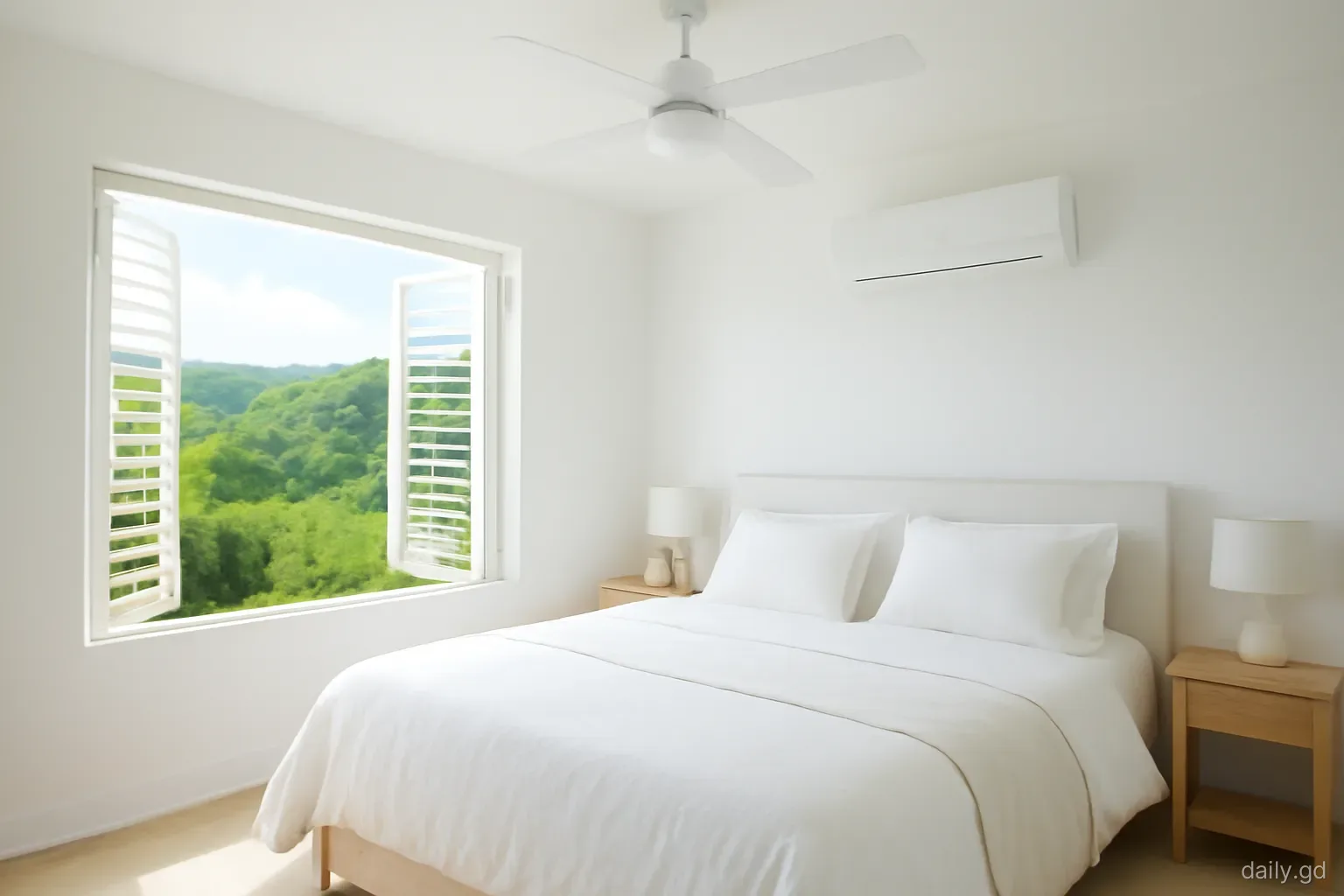
Grenada is warm all year, with daytime temperatures typically around the high twenties to low thirties Celsius and humidity that rises in the rainy season. Many Grenadians live comfortably with fans, open louvres and the trade wind. Many newcomers, especially from cooler climates, install air conditioning in their first month and then get a shock when the first electricity bill arrives.
There is a middle way that most settled households find: use the breeze and fans for most of the day, and air conditioning selectively, usually in bedrooms at night. This guide explains where heat in a house comes from, how to get the most from fans, sensible AC habits, what to look for when buying a unit and how to keep it working in salty, humid air.
Where the heat in a house comes from
Most heat enters a Grenadian house through the roof and the walls facing the afternoon sun. A galvanised metal roof without insulation can become extremely hot by midday and radiate that heat into the rooms below. Concrete walls on the west side absorb sun all afternoon and release it into the evening, which is why some bedrooms feel hotter at ten at night than they did at noon.
The trade winds, which blow broadly from the east and north-east for much of the year, are the island's natural air conditioning. Houses designed to catch them, with openings on both sides, high ceilings, galleries and louvred windows, stay surprisingly comfortable. Houses that block them, or face into still air on a sheltered western slope, are harder to cool.
Height and location matter as well. Hillside homes above Grand Anse, St George's or the south coast often enjoy a steady breeze and noticeably cooler nights, while houses in sheltered valleys and close to town can stay warm well after dark. When choosing a home, visiting in the late afternoon tells you more about its comfort than a morning viewing.
Before spending on cooling, it is worth thinking about shading. Overhangs, galleries, external shutters, trees and light-coloured roof paint all reduce the heat the house takes on in the first place, and they work during power cuts too.
Fans first: getting the most from moving air
Ceiling fans in every main room. A ceiling fan uses a small fraction of the electricity of an air conditioner and can make a room feel several degrees cooler by moving air across your skin. It cools people, not rooms, so switch it off when you leave.
Cross-ventilation. Open windows or louvres on opposite sides of the house to let the breeze run through. Even a small gap on the leeward side makes a big difference to airflow.
Pedestal and box fans. Useful in rooms without ceiling fans and for directing air at a desk or bed. Placing one in a window facing out at night can pull warm air out of a room.
Exhaust fans in kitchens and bathrooms. Removing heat and steam at the source keeps the rest of the house cooler and drier.
Night-time airing. In many locations, opening up after sunset and closing windows and curtains on the sunny side in the morning keeps rooms cooler through the day.
Using air conditioning sensibly
Air conditioning is the single largest electricity user in most homes that have it, and electricity in Grenada is expensive by international standards because most of it is generated from imported diesel. Running several units all day can easily make the electricity bill the largest monthly household cost after rent.
Most settled households limit AC to bedrooms at night, sometimes a home office during working hours. Set the thermostat to a comfortable rather than cold temperature, often around 24 to 26°C, close doors and windows while it runs, and use a timer so it switches off in the early morning when the air outside is coolest. A ceiling fan running alongside the AC lets you set the temperature a degree or two higher with the same comfort.
Humidity is part of the discomfort. Many units have a dry or dehumidify mode, which removes moisture with less cooling and can make a sticky room comfortable at lower cost. Keeping humidity down also helps with mould on clothes, shoes and walls.
Sleeping cool without air conditioning
Plenty of households sleep without AC all year, and the habits they use are worth borrowing even if you have a unit. A ceiling fan over the bed on a medium setting is the foundation. Light cotton or linen sheets breathe far better than synthetic fabrics, and a cool shower before bed lowers body temperature enough to help you fall asleep.
Open bedroom windows or louvres to the breeze, ideally with insect screens or a mosquito net over the bed, since open windows at night also let in mosquitoes. Close curtains or shutters on the sunny side during the day so the room starts the night cooler, and avoid using the oven or tumble dryer in the evening.
The hottest stretch is usually the late rainy season, when humidity is high and the wind can drop. That is when many people who manage without AC most of the year switch it on for a few weeks, which is a perfectly reasonable compromise.
Buying a unit for a Grenada home
Split units are standard. Wall-mounted split systems, with an indoor unit and an outdoor condenser, are the usual choice for homes. Window units exist but are noisier and less efficient.
Choose inverter models. Inverter units vary their speed instead of switching on and off, using noticeably less electricity over a year. They cost more upfront but usually repay it in a home that uses AC regularly.
Size the unit to the room. As a rough guide, a small bedroom often suits a unit around 9,000 BTU and a larger bedroom or small living area 12,000 BTU, but sun exposure, ceiling height and insulation all matter. Ask the installer to size it properly.
Ask about coastal protection. Near the sea, salt air corrodes the outdoor unit's coils and fittings. Some models have protective coatings; positioning the condenser away from direct sea spray also helps.
Check local service support. Buy a brand that local technicians know and can get parts for. A cheap unit that nobody can repair is expensive in the long run.
Servicing in salt air and humidity
Air conditioners in Grenada work hard and face salt, dust and humidity. Regular care keeps them efficient and extends their life considerably.
- Clean the indoor filters every few weeks. Slide them out, wash with water, let them dry and refit. Clogged filters cut efficiency and spread dust.
- Professional service once or twice a year. A technician cleans the coils, checks refrigerant and clears the drain line, which can block with algae.
- Wash the outdoor unit near the coast. A gentle rinse of the condenser with fresh water helps remove salt deposits. Ask your technician how often for your location.
- Watch for drips and smells. Water dripping inside or a musty smell usually means a blocked drain or mould in the unit.
- Protect from surges. Power cuts and surges damage compressors and circuit boards. A voltage protector with a delay on restart is a sensible investment.
Mistakes that raise bills or shorten lives
Cooling an open house. Running AC with windows open or doors propped wastes most of the energy.
Setting it very cold. Every degree lower increases running costs. Comfort comes from moving air and lower humidity as much as temperature.
Skipping servicing. A neglected unit uses more power, cools less and fails sooner.
Ignoring the roof. An uninsulated hot roof makes any cooling system work harder. Shade and insulation help every unit in the house.
Placing the outdoor unit in full sun. A condenser baking on a west-facing wall works harder than one in shade. Where possible, site it in a shaded, ventilated spot away from salt spray.
Buying the biggest unit possible. An oversized unit cools quickly but switches off before removing humidity, leaving rooms cold and clammy. Correct sizing matters more than power.
Frequently asked questions
Is air conditioning necessary in Grenada?
Not always. Many homes stay comfortable with ceiling fans, cross-ventilation and shade, especially houses that catch the trade winds. Air conditioning is most useful in bedrooms at night, in rooms facing the afternoon sun and during the hottest, most humid months.
How much does running air conditioning add to the electricity bill?
It depends on the number of units, their efficiency and how long they run, but air conditioning is usually the largest single electricity cost in homes that use it. Limiting use to bedrooms at night and choosing inverter units keeps costs manageable.
What temperature should the AC be set to in Grenada?
Many households find 24 to 26°C comfortable, especially with a ceiling fan running. Lower settings increase running costs sharply. Using a dry or dehumidify mode can also improve comfort in humid weather without heavy cooling.
How often should an air conditioner be serviced?
Clean indoor filters every few weeks and have a technician service the unit once or twice a year. Near the coast, the outdoor unit may need more frequent attention because salt air corrodes coils and fittings.
Are inverter air conditioners worth it in Grenada?
For homes that use air conditioning regularly, usually yes. Inverter units adjust their output rather than cycling on and off, which uses less electricity and keeps the temperature steadier. The higher purchase price is often repaid through lower bills.