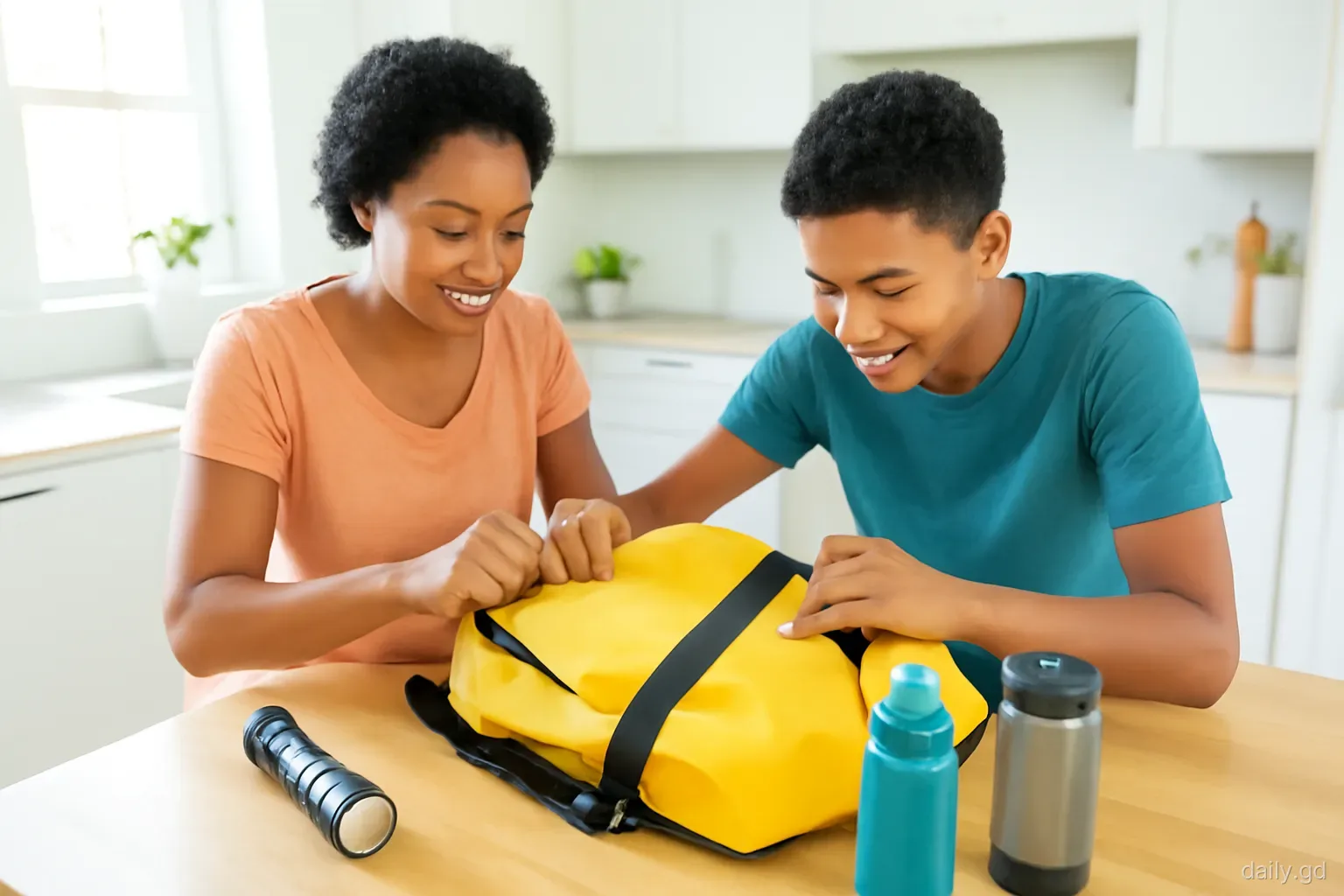
Most Grenadian households know the big jobs of hurricane season: shutters, water, tinned food. The grab bag is the job that gets left to the last evening, when the supermarket queues are long, the printer has no ink and nobody can remember where the land papers went after the last move. It is also the bag that matters most if you have to leave home in a hurry, or if the house survives but a window does not and everything on the table gets soaked.
A good grab bag is small enough for one adult to carry, packed by the end of May, and checked again in August before the busiest part of the season. This piece walks through what goes in it, how to protect papers that would take months to replace, and the mistakes that show up every time a storm comes through, as they did after Ivan in 2004 and Beryl in 2024.
Why papers matter more than you think
After a major storm, the paperwork starts immediately. Insurance claims need policy numbers and photographs of the house before the damage. Government assistance programmes ask for identification and proof of address. Banks want ID before they will release cash from a branch running on a generator. Anyone whose house was flattened in Carriacou in July 2024 learned how much depends on being able to prove who you are and what you own when the original papers are under a collapsed roof.
In Grenada, the documents that are slow and costly to replace include deeds and conveyances for land, birth and marriage certificates from the Registry, passports, driving permits, vehicle registration, insurance policies and any court or estate papers. Replacements are possible, but they involve trips to St George's, fees and waiting, all at the moment when offices themselves may be closed or damaged. Protecting the originals, and keeping copies in a second place, saves weeks of trouble later.
The papers to protect, and how
Put originals in a zip-lock bag inside a second zip-lock bag, then into a waterproof pouch or a small dry bag of the kind sold for boating. Keep a full set of photographs on your phone and in an online storage account, and give a printed copy to a relative in another parish or overseas.
- Identity: passports, national ID cards, driving permits and birth certificates for every member of the household.
- Property: deed or lease, recent property tax receipt, land survey plan if you have one, and the insurance policy schedule showing the sum insured.
- Money: bank and credit union account details, and a short list of who to contact at each, written on paper rather than stored only in a phone.
- Health: a written list of prescriptions with doses, vaccination cards for children, and any specialist letters.
- Vehicle: registration and insurance certificate, since cars are often damaged by falling trees and claims start quickly.
- Photographs: a walk-round video of each room and the outside of the house, taken in May, which serves as your before picture for any claim.
What else goes in the bag
Cash in small notes. When the power is off, card machines and ATMs stop. Keep a few hundred Eastern Caribbean dollars in small notes, since shops and bus drivers may not have change in the days after a storm. The exact amount depends on your household, but enough for food, fuel and transport for a week is a reasonable target.
Medicines for at least a week. Pharmacies may stay shut for several days, and supply from Trinidad or further afield can be slow after a regional storm. Ask your doctor in May for a prescription that lets you hold a spare week or two of anything essential: blood pressure tablets, insulin and diabetes supplies, asthma inhalers.
Light and power. A head torch per adult, spare batteries, and a charged power bank for each phone. A small solar charger is useful if the outage lasts more than a few days, which it did across much of Carriacou after Beryl.
Basic comfort items. A change of clothes, a light rain jacket, sturdy shoes rather than slippers, a towel, a whistle, a small first aid kit, hand sanitiser and a refillable water bottle. People who reach a shelter in wet clothes and flip-flops regret it within hours.
Spare keys and glasses. Car and house keys on a separate ring, and an old pair of prescription glasses. These are small, cheap and very hard to replace after a storm.
A timeline that actually works
The bag is easier to manage if you split the work across the season rather than doing it all on the night a warning is issued.
- Late May: gather and scan all papers, buy the waterproof pouch, and pack the non-perishable items. Take the walk-round video of the house.
- Early June: check that the shelter list published by NaDMA for your district includes a building you can reach, and note it on paper inside the bag.
- July: refresh the cash and check medicine expiry dates. Make sure every adult knows where the bag lives.
- Mid-August, before the peak: charge power banks, replace batteries, and add anything new, such as a recent insurance renewal.
- When a watch is issued: put phones on charge, add the day's medicines, and move the bag next to the door you would leave by.
- After the season ends on 30 November: take originals back out, store them dry, and note what you used so you can restock next year.
Mistakes that come up every season
Keeping everything in one place. A bag in the house and copies on a laptop in the same house is one point of failure. At least one set of copies should live somewhere else: a relative in another parish, a family member abroad, or secure online storage.
Relying on a phone alone. Phones run flat, get wet and get lost. Write the essential contacts and account numbers on paper and keep them in the pouch.
Forgetting the elderly and children. A grandparent's medication, a baby's formula and nappies, or a child's inhaler are the items most often missing. Each person in the house should have their own small section of the bag.
Packing too much. A bag that needs two people to lift will be left behind. Food and bulk water belong in the house supplies, not in the grab bag.
Treating it as a once-only job. Cash gets borrowed, batteries drain, medicines expire. A bag packed in 2024 and never opened since may not do its job in a storm this year.
Extra planning on Carriacou and Petite Martinique
On the sister islands the grab bag carries more weight, because help and supplies have to cross the water. When Hurricane Beryl made landfall on Carriacou on 1 July 2024, the great majority of homes on Carriacou and Petite Martinique were damaged or destroyed, power and telecommunications were cut, and for the first days the main link with the mainland was by sea and air relief. Households that had cash, medicines, water purification and copies of identity papers were in a far better position to deal with assistance and insurance once responders arrived.
If you live on either island, think about what you would need if the ferry did not run for a week. Hold a larger medicine reserve, more cash, and a means of purifying water such as tablets or a filter bottle. Keep scanned copies of papers with a relative on the mainland or abroad, since a single storm can affect everything on an island of this size at once. Agree with family in Grenada or overseas how you will make contact when phone networks come back, and who will act on your behalf with banks or insurers if you cannot travel.
Frequently asked questions
When should a grab bag be ready in Grenada?
Aim to have it packed by the end of May, before the hurricane season officially opens on 1 June. Check it again in mid-August because August to October is when most storms that affect the southern Caribbean tend to form and pass through.
Is it worth keeping land deeds at home during hurricane season?
Many families do, but they should be in a sealed waterproof pouch and you should hold certified or scanned copies elsewhere. Some people prefer to keep originals with their lawyer or in a bank safe deposit box, depending on what is available to them.
How much cash should be in the bag?
There is no fixed figure. Think about a week of food, fuel and transport for your household, in small Eastern Caribbean notes. After a major storm, card payments and ATMs can be unavailable for days, especially away from St George's.
What if prescription medicines cannot be stocked ahead?
Speak to your doctor and pharmacist in May. Many will help you build a small reserve over two or three refills. Keep a written list of your medicines and doses so a shelter nurse or another pharmacy can help if your supply runs out.
Do visitors on long stays need a grab bag too?
Yes, in a simpler form. A passport, travel insurance details, cash, medicines, a torch and a charged phone in a waterproof bag covers most needs. Ask your landlord or host what their storm plan is and where the nearest shelter is.