
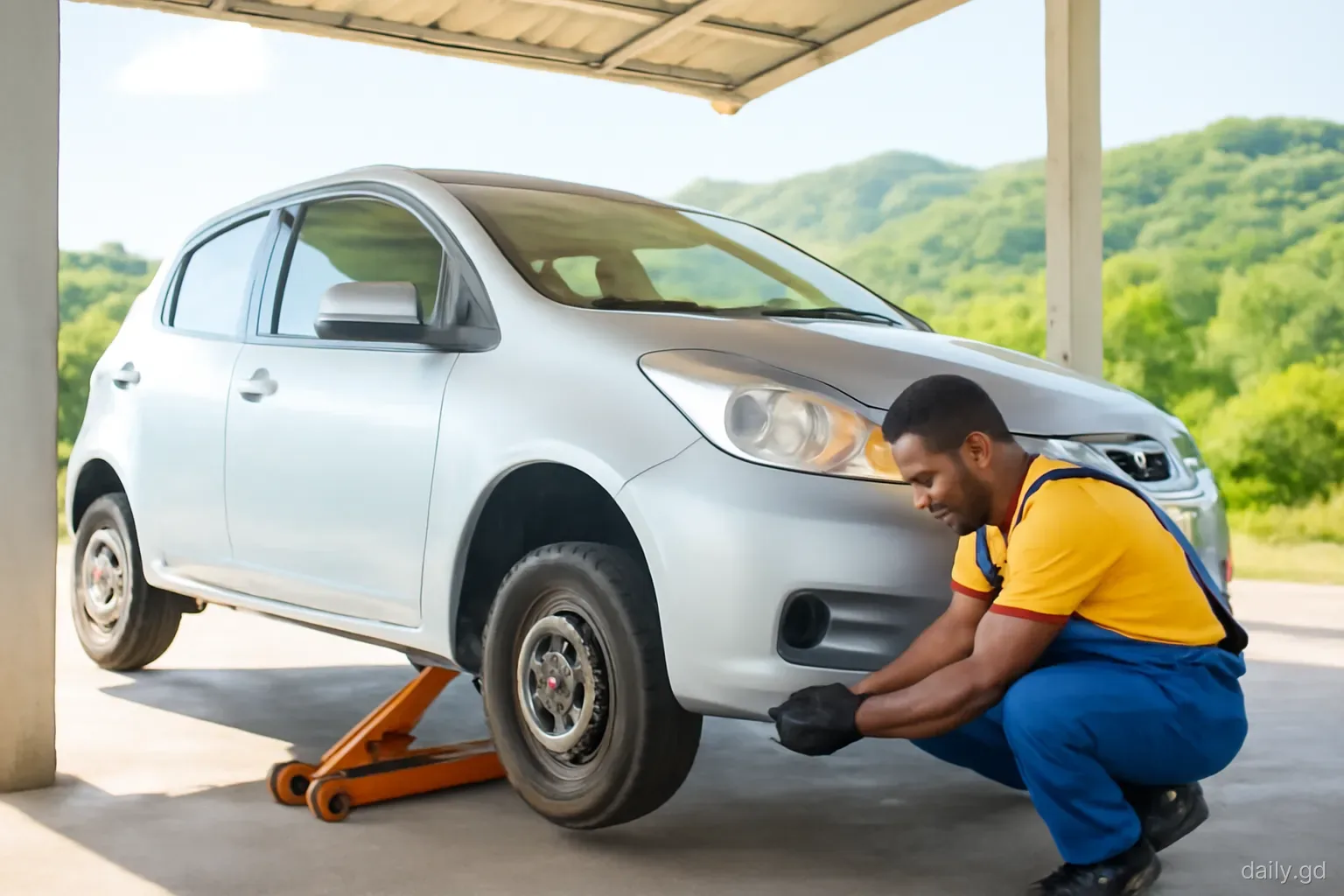
A car changes life in Grenada. It turns an hour on two route buses into a twenty-minute drive, makes a supermarket run with heavy bags easy and opens up beaches and villages that buses rarely reach. It also becomes, for most households that own one, the third-largest regular expense after housing and food, and the one most likely to deliver a sudden bill.
This article adds up what owning a car here really involves over a year, beyond the purchase price. Figures are kept to broad ranges or left out where they change too often to be useful: fuel prices are adjusted by government from time to time, insurance premiums depend on the car and the driver, and repair costs depend heavily on whether parts are on the island. Treat it as a checklist for your own sums.
Buying: why cars cost more here
Almost every car in Grenada is imported, and imports of vehicles attract substantial duties and taxes on top of the purchase price and shipping. The charges are generally heavier for newer and larger vehicles, which is one reason the roads are full of compact Japanese hatchbacks, small SUVs and pickups, many of them imported second-hand. Grenada drives on the left, and right-hand-drive cars dominate.
The result is that used cars hold their value far better than in North America or Europe. A ten-year-old car that would be close to scrap value elsewhere can still command a meaningful price here. That cuts both ways: buying is expensive, but resale is good if the car has been looked after, and many residents treat a car almost as a store of value. Before buying, have an independent mechanic inspect the vehicle, check the underside for rust and confirm that the registration and licensing papers are in order with the seller.
Importing your own car is possible, but the duty calculation, age limits and paperwork deserve careful checking with the Customs and Excise Division or a customs broker before you ship. Returning nationals may qualify for concessions; others usually do not.
The fixed yearly costs
Insurance. Third-party insurance is compulsory for any vehicle on the road, and many owners of newer cars take comprehensive cover. Premiums vary by insurer, the value of the car, the driver's age and history, and whether the car is used for business. Shop around among the insurers on the island and ask exactly what is covered for storm and flood damage, which is not always included.
Vehicle licence. Every car must be licensed annually, with the fee generally depending on the type and size of vehicle. Driving an unlicensed car invites fines and invalidates insurance in many cases, so diarise the renewal date.
Driving licence. Residents need a Grenadian driving licence; visitors use a temporary local permit. The licence must be renewed periodically, and newcomers converting a foreign licence should check the current requirements with the licensing authority before their visitor permit expires.
Parking. Most residential parking is free, but regular trips into St George's often mean paying for parking or circling for a space. Workers in town sometimes find the bus cheaper and faster for the daily commute.
Fuel: the steady drain
Petrol and diesel are sold by the gallon at service stations around the island, and prices are set through a government mechanism that adjusts them periodically in line with world oil prices and taxes. Because the price is regulated, it is usually the same at every station on the mainland at any given time, so there is little point driving around for cheaper fuel. Prices on Carriacou may differ because of the extra shipping.
How much you spend depends less on distance than on terrain. Grenada's roads climb and twist constantly, and a car crossing the Grand Etang road or climbing out of St George's uses more fuel than the distance suggests. A commuter driving daily from St David or St Andrew to the south-west will spend far more on fuel than someone living within a few miles of work. Small engines, careful driving and combining errands make a noticeable difference over a year.
Wear and tear that surprises newcomers
Brakes and clutches. Steep hills and stop-start driving wear brake pads, discs and clutches faster than flatter countries do. Budget for them as regular items, not emergencies.
Tyres. Potholes, broken road edges and heat shorten tyre life. Good tyres are also a safety item on wet, winding roads in the rainy season, so this is not the place to economise.
Suspension. Bushes, shock absorbers and ball joints suffer on rough secondary roads and steep driveways. A knocking noise on bumps deserves early attention.
Rust. Salt air near the coast and constant humidity attack the underside, brake lines and body. Regular washing, especially underneath, and treating rust early add years to a car's life.
Air conditioning. Car air conditioning works hard all year. Regassing and replacing compressors are common repairs.
Batteries. Heat shortens battery life, often to a couple of years. A failing battery tends to show itself on a hot morning in the supermarket car park.
Parts, mechanics and waiting
Common parts for popular models are usually available from local suppliers, though often at higher prices than abroad. Less common parts may need to be ordered from Miami, Trinidad or further afield, which can leave a car off the road for days or weeks. Owners of unusual or luxury models feel this most, which is a strong argument for choosing a popular make and model when you buy.
Mechanics range from main dealers with workshops in the south to independent garages in every parish and roadside mechanics working from home. Good independent mechanics are valued and often busy; the usual way to find one is by recommendation from colleagues or neighbours. Ask for the old parts back when something is replaced, agree the price of parts and labour before work starts, and keep receipts so the car's service history supports its resale value.
Some owners buy common service items such as filters, wiper blades and brake pads on trips abroad or have them sent by relatives, then pay a mechanic for labour only. Declare imported parts at customs, as duty may apply.
Car, no car, or something in between
Before buying, it is worth asking honestly whether a car is needed every day. Households living on a main bus corridor in the south, working in St George's or Grand Anse, often find that buses cover the weekday routine and taxis cover the rest for less than the yearly cost of a car. Hiring a car for occasional weekends away is another option, though rental rates are priced for visitors.
For families with children at schools across parishes, people living up steep side roads far from a route, shift workers finishing after the buses thin out in the evening, and anyone in rural St Patrick, St Mark or St Andrew, a car is closer to a necessity. In that case, the aim is not to avoid the cost but to control it: a sensible car, a trusted mechanic and money set aside every month. Some couples manage with one car and the bus rather than two cars, which saves an entire set of fixed costs.
Ways to keep the car budget under control
Choose the car for the island. A small, popular, fuel-efficient car with good ground clearance is cheaper to insure, fuel and repair than a large or rare vehicle.
Service on schedule. Oil changes and brake checks done on time prevent most of the expensive failures.
Mix in the bus. Using route buses for the daily commute into St George's and keeping the car for evenings, shopping and weekends cuts fuel, parking and wear.
Share school runs and lifts. Car-sharing with neighbours and colleagues is common and sociable, and splitting fuel for a regular commute halves one of the biggest lines.
Wash the underside. A regular rinse under the car, especially after driving on coastal roads or beaches, is the cheapest rust protection there is.
Put money aside monthly. Divide the expected yearly cost of insurance, licence, tyres and servicing by twelve and save it monthly, so renewal and repair bills do not land all at once.
Frequently asked questions
Why are cars so expensive in Grenada?
Nearly all cars are imported and attract significant import duties and taxes on top of the purchase price and shipping. The charges tend to be higher for newer and larger vehicles. As a result, used cars hold their value well, and compact second-hand Japanese models are the most common choice.
Is car insurance compulsory in Grenada?
Yes. Third-party insurance is required for any vehicle on public roads. Many owners of newer cars buy comprehensive cover as well. Check carefully whether a policy covers storm, flood and falling-tree damage, as this varies between insurers and policies.
Are fuel prices the same everywhere in Grenada?
Fuel prices are set through a government pricing mechanism and adjusted periodically, so stations on the mainland generally charge the same price at any given time. Prices on Carriacou can differ because of transport costs. Check current prices, which are announced publicly when they change.
Can a foreigner drive in Grenada with their own licence?
Visitors need a temporary local driving permit, obtainable on presentation of a valid foreign licence. Residents should obtain a Grenadian licence. Requirements and fees change, so confirm the current process with the licensing authority or the police traffic department before relying on a foreign licence long term.
What car is best for living in Grenada?
A popular compact or small SUV with decent ground clearance, good air conditioning and readily available parts usually works best. It handles steep hills and rough secondary roads, uses less fuel and is easier and cheaper to repair than a rare or large vehicle.